Have you ever walked into a hotel lobby, touched a lush green palm, and realized only then that it wasn’t real?
That is the goal.
For years, artificial plants had a bad reputation. They were shiny and visibly fake from across the room. But now, the game has changed entirely. Manufacturing technology has evolved from simple silk printing to 3D modeling and “Real Touch” latex injection.
As a leading manufacturers in artificial plants industry, we know exactly what goes into the mold. We know that the difference between a “plastic decoration” and a “botanical replica” usually comes down to some details you might overlook. This expert guide will arm you with the inside knowledge to help you identify truly high-quality artificial plants.
Material Matters for Faux Plants: Silk, Plastic, or Real Touch?
Material choice is fundamental to both realism and long-term performance. You typically encounter three types: silk, plastic (PE/PVC), and Real Touch. Silk offers a soft texture but fades quickly in sunlight, making it unsuitable for exterior use. Standard plastics are durable but require good engineering to avoid a glossy sheen. The most advanced option, Real Touch, combines high-density PE and latex. This composite delivers natural texture with better UV resistance, allowing for sharp details and a durable, waxy feel.
What Key Features Make Artificial Plants Look Realistic?
Before we list the realistic plants, you need to know what to look for. When we design a new prototype at the factory, we aren’t trying to make a “perfect” plant. We are trying to make a biologically accurate one.
1. The Real Touch Factor: Material and Texture
The number one feature separating the average from the amazing plant is the texture. Traditional plastic leaves feel thin, shiny, and smooth. Real Touch technology involves a coating or infusion that gives the leaf a slightly matte finish and a substantial, rubbery thickness. This mimics the actual structure of a natural leaf. When you gently run your hand over a leaf, it should feel soft yet firm, not flimsy. This is a non-negotiable trait for any artificial plants Look Most Realistic contenders.
2. Color Gradience and Pigmentation Accuracy
Natural leaves are never a single, uniform shade of green. They show slight variations in hue, often lighter at the tips or where new growth appears. Our factory process involves multiple layers of hand-applied pigment, not just one coat of green dye. This is crucial: check the back of the leaf. Is it slightly paler than the front? Are the veins a darker, more embedded color? This careful color work is what makes fake plants look real and believable under natural light.
3. Veining, Imperfections, and Mold Quality
The mold used to stamp the leaf shape is paramount. Low-quality molds produce flat, stylized veins. High-quality plastic plants are made using 3D scans of real plants, capturing the minute, irregular textures and depths of the veins. Furthermore, look for deliberate imperfections. A truly realistic plant is never flawless, so we intentionally add subtle imperfections to mimic the plants. This adds a layer of authenticity that screams “real.”
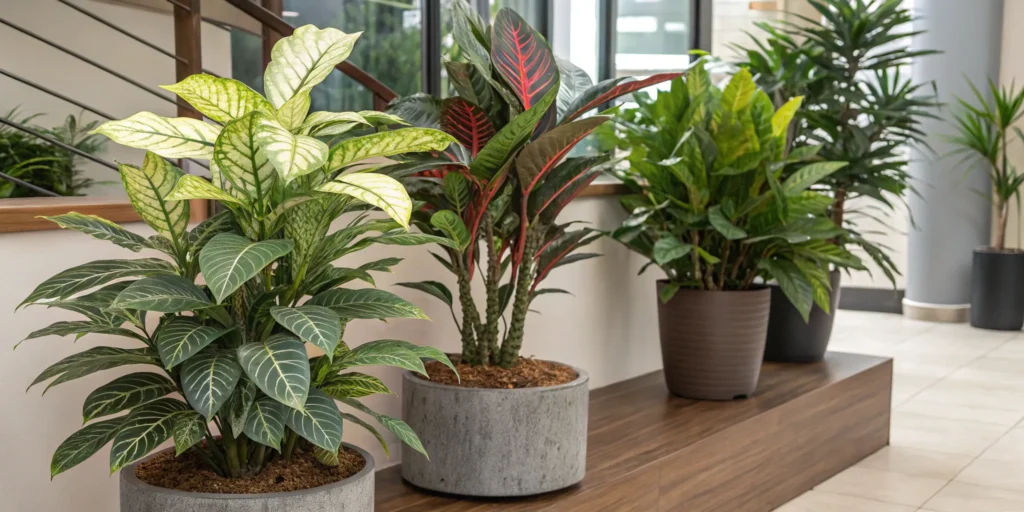
4. Stem and Trunk Realism (The Anchor)
People often focus too much on the leaves and neglect the stems. The trunk and branch structure must be naturally irregular. Avoid plants with uniform, straight, obviously plastic trunks. Look for false plants with a multi-toned, rough texture on the main trunk that mimics bark. Stems should vary in thickness and be bendable, not rigid plastic sticks. On trailing plants, the stem near the base should be thick and taper naturally as it branches out, making them truly best realistic faux plants.
5. The Root and Potting Presentation
A realistic plant is often undermined by a poor base. Avoid plants pre-potted in shiny, black plastic nursery pots. You should look for two things: either the plant is weighted down with hardened cement or foam covered with faux soil/moss, or it comes in a separate, minimalist base ready for you to drop into a decorative planter. A good manufacturer includes a solid, heavy base to prevent the plant from feeling top-heavy and cheap.
The most convincing high-quality artificial plants are built with multi-layered materials and intricate, hand-finished coloring techniques. From a manufacturing perspective, this complexity significantly drives up the cost, but it is the secret to making fake plants look real. If a plant is cheap, it’s almost certainly missing these steps.
At FeelReal, we focus on material science. We engineer UV-stabilized PE formulas that resist fading, develop fire-retardant coatings that meet international safety standards. And, we use reinforced fiberglass trunks calibrated for wind resistance. Our pigments, plastics, and resins are tested for temperature tolerance, impact strength, and color stability. Every material is selected, and verified through strict lab testing before entering production, giving our artificial plants the durability and realism required for home and commercial projects.
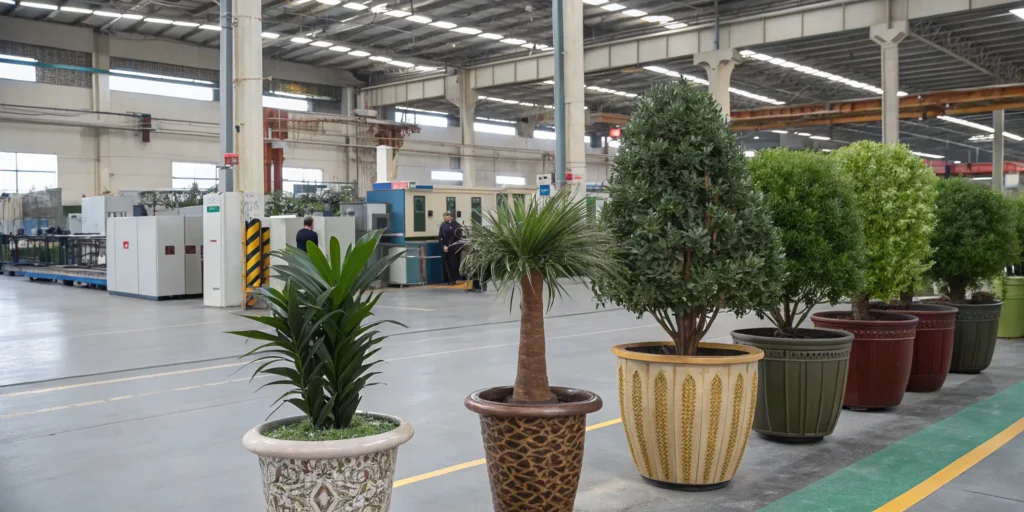
Top 6 Most Realistic Artificial Plant Species
Based on decades of factory production and quality control, we know certain plant varieties possess characteristics that make them easier to replicate with perfect realism. When aiming for a lifelike plants, focus your search on these six categories.
1. Artificial Fiddle Leaf Figs (Ficus Lyrata): Assessing the Trunk and Leaf Ratio
The Fiddle Leaf Fig is the king of statement realistic houseplants, but it is also one of the hardest to get right. It has large, glossy leaves and a prominent trunk, leaving no room for error. A genuinely realistic Ficus Lyrata must have a multi-layered trunk that looks woody, not plastic, with variations in color and texture.
We use fiberglass cores wrapped in composite materials to achieve this authentic feel and prevent that cheap, smooth plastic look. The leaves must show light, subtle wrinkles and uneven edges. Check the stem where the leaf meets the branch—it should have a slight, realistic swelling, not just a thin plastic connection.
2. Artificial Monstera Deliciosa: The Importance of the Cuts
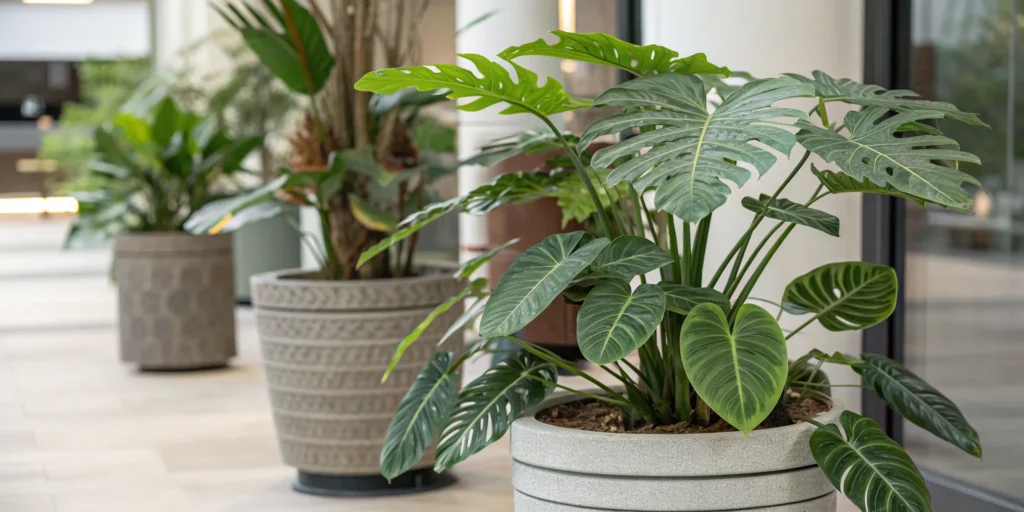
The Monstera is trending, and its realism hinges on the quality of its iconic holes and deep cuts. High-quality artificial plants in this category use thick, multi-layer PE material, ensuring the leaf doesn’t look flat or flimsy. The key factory detail is the smoothness of the cuts; cheap versions have ragged, obvious plastic edges. Look for fine, subtle veining and a slightly varied, dark green color.
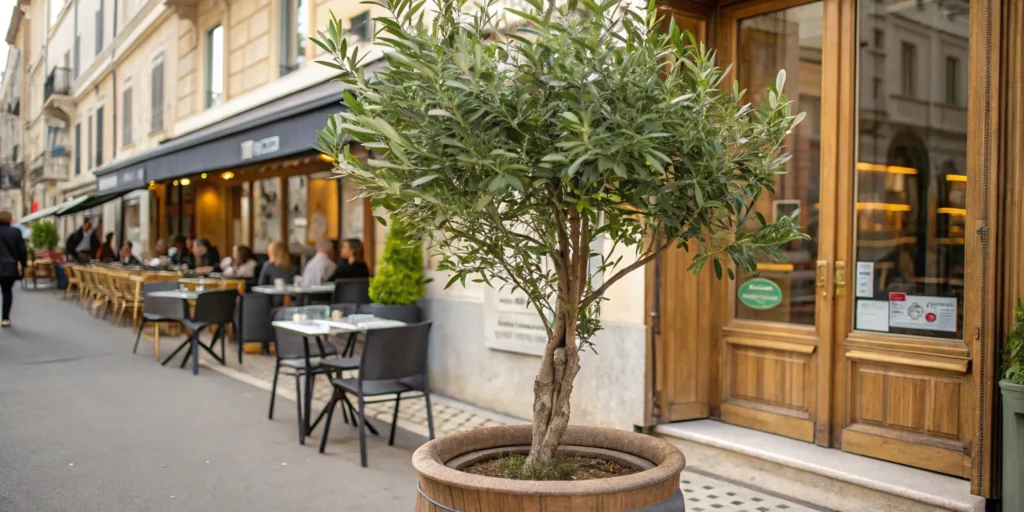
3. Artificial Olive Plants: Trunk Detail and Subtle Leaf Color
Olive trees are excellent candidates for best realistic faux plants due to their matte, elongated leaves and highly textured trunks. The realism is entirely in the trunk—it should be hand-painted and sculpted to appear twisted, gnarled, and old. The leaves have a two-tone effect: a standard green on top and a subtle silvery-grey flocking underneath. This grey underside is what catches the light and creates that distinctive, shimmering, realistic movement that makes fake plants look real from a distance.
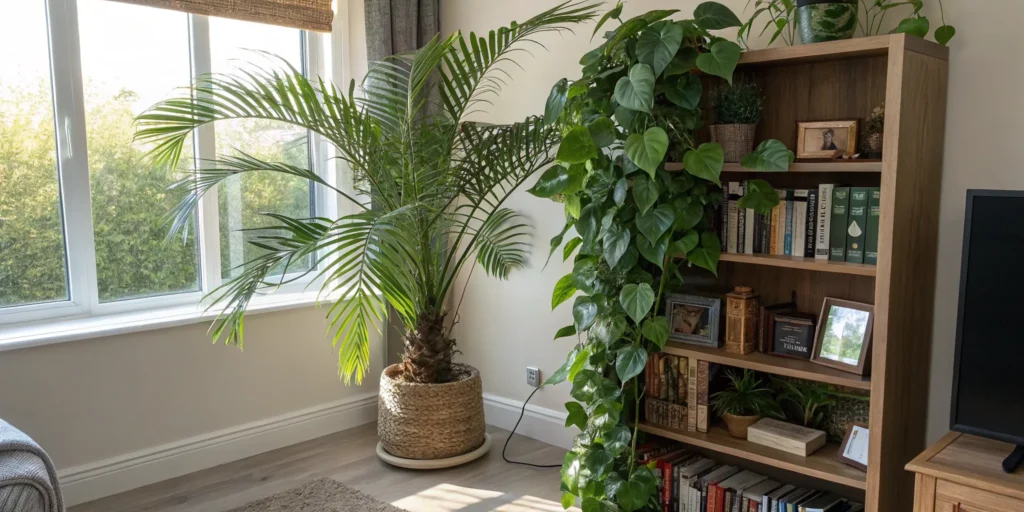
4. Artificial Palm Trees (Kentia/Areca): Layering and Rib Stiffness
Palms are all about structure and assembly. The challenge is making the fronds look like they’re swaying naturally. A top-tier faux palm achieves realism by using strong wire embedded in the center rib of each frond. This allows the frond to be bent and shaped perfectly. Avoid models where the fronds are thin, flat, and attached to the center pole at a single, obvious point. The crown should be assembled in layers, creating natural gaps and shadows that enhance the depth and prevent light from shining through the center.
5. Trailing and Hanging Plants: The Illusion of Movement and Density
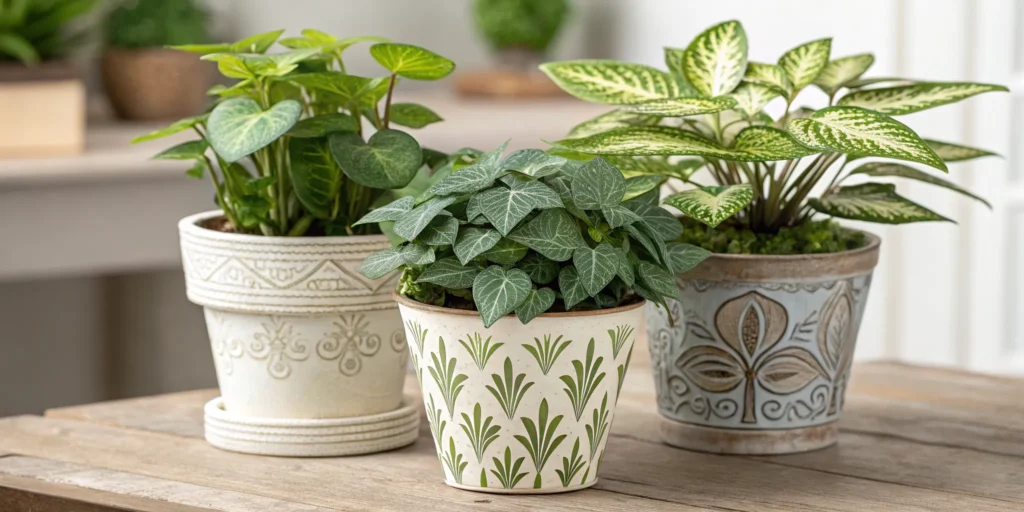
Trailing plants (like Pothos, Ivy, or String of Pearls) are inherently easy to make look real. Their realism is significantly boosted by gravity and placement. When placed high on a shelf or mantlepiece, the flowing nature of the vines and the dense foliage create natural shadows and depth. This movement instantly distracts the eye from minute imperfections. For the most believable effect, look for vines with variable lengths and inconsistent leaf spacing. Nature is messy, and so should your faux vines be. The illusion of density and flow is what helps these realistic houseplants deliver maximum impact with minimal fuss.
6. Artificial Topiary: Achieving Perfect Symmetry and Shape
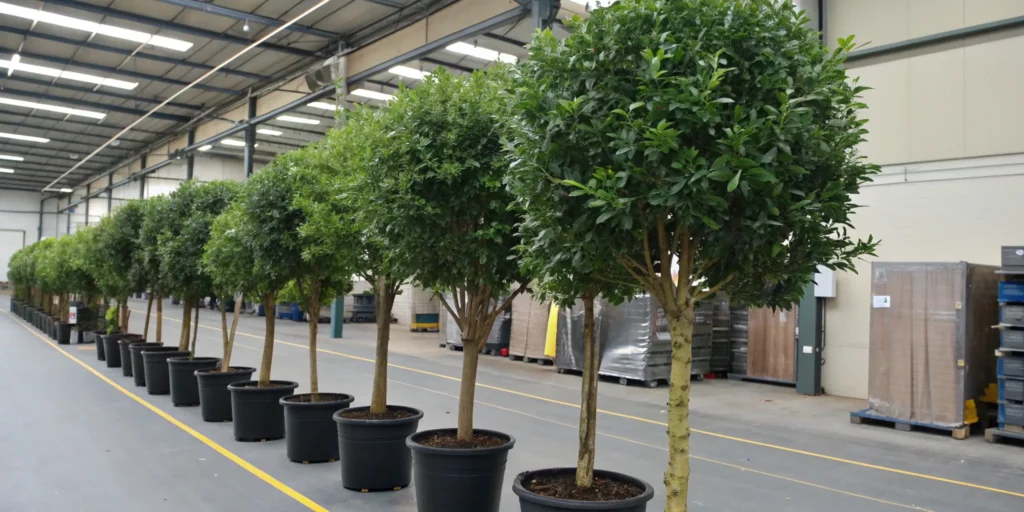
Artificial topiary is primarily used for symmetry, making it a classic staple in entryways, patios, and formal gardens. The secret to highly realistic faux topiary is the density of the foliage and the quality of the internal wire frame. Low-quality versions use flimsy frames and sparse leaves, allowing you to clearly see the mesh or central pole underneath.
High-quality artificial topiary plants ensure the leaves are densely packed and tightly layered, providing a full, lush appearance that holds its shape without collapsing. For outdoor use, UV resistance is absolutely non-negotiable. The best topiaries use stabilized PE material that prevents the bright green color from fading to blue or white over time.

How Can You Spot a Low-Quality Fake Plant Instantly?
You don’t need to be an expert to spot a cheap imitation. The fastest giveaway is an unnatural, high gloss and uniform color. Low-grade plastic reflects too much light, creating an obvious, artificial shine, whereas real leaves are matte or subtly waxy. Check the color: is it a single, uniform, neon-bright green? High-quality artificial plants always feature subtle gradients and varied pigmentation.
Next, perform the “flimsy test.” If the leaves crinkle like paper or detach easily from the stem, the material lacks the density needed for realism. Finally, inspect the assembly: visible mold seam lines, poorly trimmed edges, or excessive glue residue are definitive red flags that show lack of factory quality control.
How to Make Your Faux Plants Look Even More Realistic?
Presentation can maximize the realism of your high-quality artificial plants. These three critical steps can instantly transform its appearance.
1. The “Potting” Hack: Eliminating the Starter Pot
Artificial plants arrive in a small “starter pot” never meant for display. Hide this base with a stylish planter. Use a decorative planter (basket or ceramic) 2-3 inches wider than the starter pot. Place the plant inside, using bubble wrap or cardboard for stability. Crucially, top the visible surface with real dirt, dried moss, or stones.
2. The “Fluffing” Technique:
Plastic plants are compressed for shipping, leaving branches unnaturally straight. Realism requires natural asymmetry. Spend sometime to shape the plant. Gently bend the internal wires outward, creating a slight, gentle arc—real branches naturally droop. Rotate and twist leaves toward various directions, mimicking phototropism. This eliminates the perfect, factory-made look.
3. Location, Location, Location:
Never place a faux plant where a real one couldn’t logically survive. For instance, a sun-loving olive tree in a dark corner signals “fake.” Place your artificial plants in areas where natural light is present. This subconscious cue reinforces the illusion of the plant thriving. Expert Insight: Mix real and fake plants strategically. Placing a real pothos near a large faux palm creates a powerful “halo effect” of authenticity for all greenery in the room.
4. Care and Maintenance: Eliminating Dust
Dust is the number one enemy of realistic faux plants. Dust creates an unnatural dullness that instantly breaks the illusion. Routine maintenance is key to keeping the plants looking realistic.
Routine Dusting: Use a soft, microfiber cloth or a feather duster weekly. For heavily textured plants, use a soft brush or a hairdryer on the cool setting to blow dust away.
Deep Cleaning: Every 3-6 months, take the plant outside and gently wipe the leaves with a damp cloth. Wipe dry immediately afterward to prevent water spots.
FAQs About Realistic Artificial Plants:
1. Do artificial plants look tacky in a home?
Not anymore. If you choose high-quality “Real Touch” varieties and style them in proper pots, they add elegance and warmth. The “tacky” reputation comes from cheap, shiny dollar-store flowers. Invest in quality, and people won’t know the difference.
For more context, read our full guide: Are Fake Plants Tacky? A Closer Look at This Decor Trend.
2: How long do realistic artificial plants last?
Indoors, a high-quality faux plant can last 5 to 10 years. They don’t die, and they don’t grow out of shape. With proper dusting, their structural integrity and color can remain pristine indefinitely, offering years of maintenance-free greenery.
3: Can I put these plants outside?
Only if they are labeled “UV Resistant” or “UV Rated.” Standard silk or latex plants will fade if exposed to direct sun. Look for Polyethylene (PE) plants specifically engineered for outdoor use.
4. Can I use real soil around the base of the artificial plant for better realism?
Yes, this is an excellent pro tip! Adding a thin layer of dry, sterilized topsoil or decorative pebbles over the faux base material will dramatically boost the illusion.
Conclusion:
The secret to truly realistic greenery is about knowing the five key details: Real Touch materials, multi-tone color gradation, detailed vein molds, sturdy stems, and a quality base. By focusing on these factors, you ensure that the Artificial Plants Look Most Realistic you choose.
FeelReal is a leader in manufacturing the Artificial Plants, blending decades of expertise with natural design aesthetics. We specialize in “Real Touch” technology and industry-leading UV stabilization, ensuring that your greenery looks authentic and lasts longer than any competitor’s. Our commitment is to quality, detail, and creating realistic houseplants you’ll never have to water.
Contact our design experts today to view our catalog and receive a personalized quote for your next high-realism project!