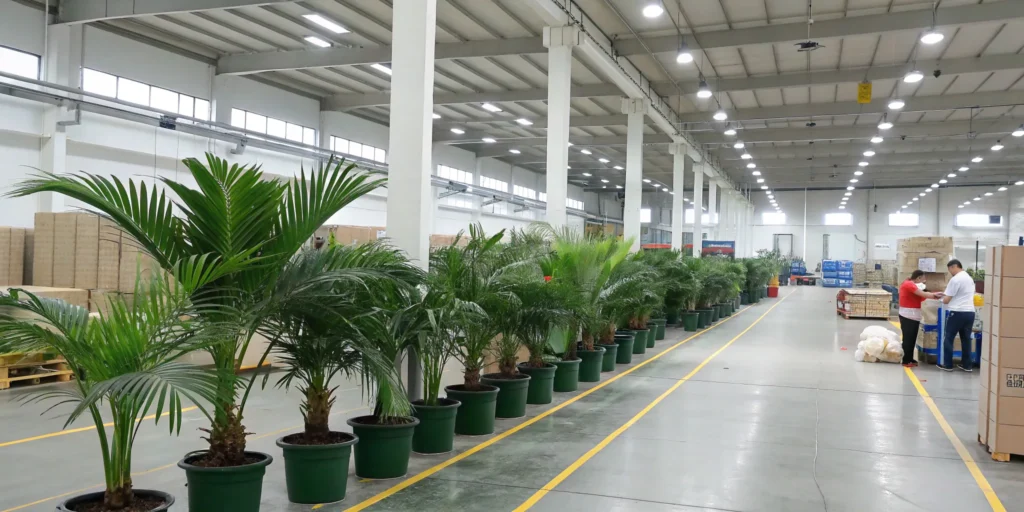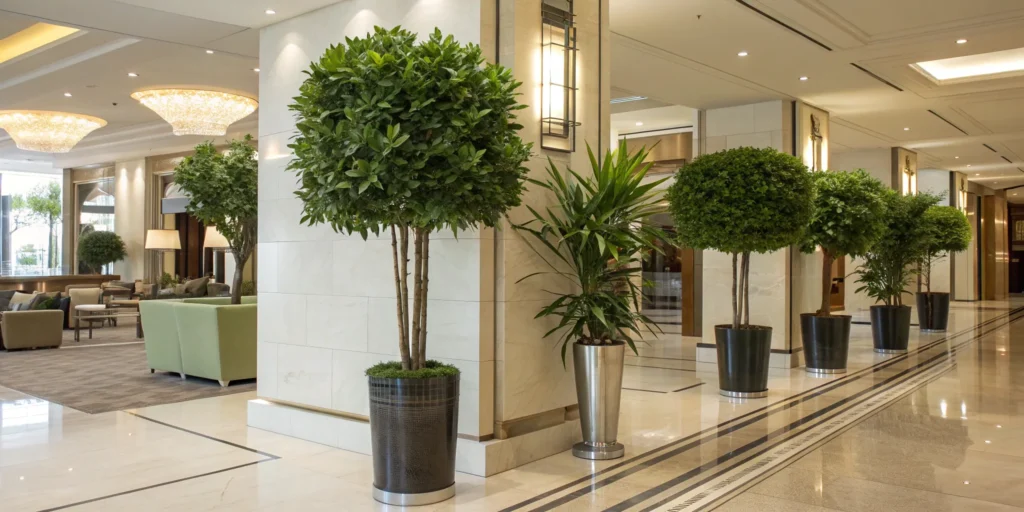
For years, “fake plants” carried a stigma—visions of dusty, shiny plastic flowers in a waiting room come to mind. The debate between real and artificial plants is one of the most enduring topics in interior design. Nowadays, artificial plants have moved far beyond the dusty, obviously “plastic” versions of the past.
As industry experts with deep roots in the manufacturing of faux plants and flowers, we have witnessed a massive shift in technology. Today’s fake plants are engineered using 3D scanning, and “Real-Touch” polymers that can fool even the most seasoned botanist.
To help you make the right decision for your home or business, we are breaking down the honest pros and cons of artificial greenery, backed by manufacturing insights and the latest 2025 market trends.
What Are the Main Benefits of Artificial Plants?
Why are designers and landscapers increasingly turning to faux greenery? It goes beyond just “not killing them.” Here is a deep dive into the practical advantages.
Zero Maintenance Required
This is the undeniable champion of the “pros” list. Artificial plants and flowers require no watering, pruning, repotting, or specific soil requirements. They are a one-time purchase that delivers immediate, lasting visual impact without the time commitment. For commercial spaces, this translates directly into significant labor cost savings by eliminating the need for dedicated maintenance staff or specialized plant care contracts.
Unlimited Placement
Real plants are dictated by nature’s rules: light, temperature, and humidity.
Dark Corners: Plastic plants thrive where real plants simply can’t. Whether it’s a windowless hallway, a shaded corner of the living room, or a dim office lobby, faux greenery keeps its shape and color without the need for sunlight. They are perfect for adding life and warmth to any low-light space with zero maintenance.
Thriving in Extreme Conditions: Modern artificial plants are engineered to for resilience against harsh weather. They can withstand extreme heat and freezing cold. And, their robust, weighted construction allows them to endure strong winds. This durability ensures visual consistency in challenging locations.
Allergy-Friendly Solution
Real plants carry potential allergens, including pollen, mold spores that grow in the soil, and dust mites.
Non-Toxic Materials: High-quality manufacturers use non-toxic polyethylene (PE) or advanced silk blends, eliminating the risk of pollen-related allergies.
Safety Assurance: This makes them an ideal solution for hospitals, schools, or households with sensitive individuals.
Long-Term Cost Savings
While the initial investment in a high-quality, hyper-realistic faux plant can be higher than a live specimen, the long-term total cost of ownership is significantly lower.
| Cost Factor | Real Plants | High-Quality Artificial Plants |
| Initial Cost | Usually low to moderate depending on plant type, size, soil, and pot. Some species require frequent repotting, adding to the early cost. | Moderate to high because of premium materials like PE, silk, or UV-resistant coatings, but paid once upfront. |
| Ongoing Costs | Continuous expenses: watering, fertilizer, new soil, pest treatment, plant food, pruning tools, and replacement when plants die from neglect or poor conditions. | Almost zero — only occasional cleaning or dusting. No water, fertilizer, or replacement costs. |
| Long-Term Cost Efficiency | Often higher over time due to maintenance supplies, replacements, and care requirements. | More cost-effective in the long run because a single purchase lasts many years with no extra spending. |
| Expected Lifespan | Shorter, especially indoors without proper care — many last only 1–5 years. Leads to repeated purchasing costs. | 5–10+ years indoors, and 3–5+ years outdoors with UV protection — reducing replacement frequency. |
Consistent Year-Round Appearance
Artificial plants provide guaranteed, static beauty. They never wilt, brown, shed leaves, or enter an unattractive dormant phase. They are molded based on “ideal” specimens: full canopies, flawless leaves, and balanced silhouettes. This consistency is crucial for retail displays, showrooms, and hotel lobbies must maintain a flawless look.
Versatile Placement Options
Faux plants offer design flexibility for spaces where real plants are physically impractical. Modern faux plant usage is no longer limited to individual potted plants. Manufacturers now produce a variety of specialized systems, which is especially important for commercial designs (learn more about commercial design applications):
- Assembled green wall panels and flexible mesh for vertical garden decoration
- Modular hedge systems for balcony screening, fences, and dividers
- Ceiling foliage systems and hanging vines compatible with common ceiling grids
- Custom-shaped plant features, such as logo silhouettes and themed sculptures

Safe for Pets and Kids
Many popular houseplants (like Lilies, Philodendrons, Sago Palm, Snake Plant and Dieffenbachia) are toxic to cats and dogs if ingested. High-quality, certified faux plants are a non-toxic decor solution, eliminating the risk of accidental poisoning for both children and pets. This is a crucial safety factor for many modern families.
What Are the Drawbacks of Fake Plants?
To be a true expert, we must be transparent. Artificial plants are not perfect, and they lack some of the biological magic of living flora. They have limitations that should be acknowledged.
No Air Purification Benefits
This is the most significant functional advantage of natural plants. Real plants absorb carbon dioxide and release oxygen. Faux plants offer none of these biochemical benefits. For spaces focused purely on air quality improvement, a mix of real and fake plants is the ideal solution.
Initial Cost Can Be Higher
Truly high-end artificial plants have significant upfront costs embedded in:
- Industrial design and 3D modeling
- Precision mold making
- Multi-layer painting and hand detailing
- Specialized materials, including UV-resistant and fire-retardant
UV-stable or flame-retardant materials are more expensive than standard resins, and stricter environmental compliance raises costs further.
For short-term use—pop-up events, seasonal booths, one-time exhibitions—real plant rental or simple live arrangements can be cheaper. Artificial plants become financially attractive when the intended use is long term.
Lack of Natural Ambiance
No matter how realistic the plant, it lacks the dynamic vitality and organic sensory experience of life:
- Faux plants have no natural scent (though this is beginning to change with “smart” tech, as discussed below).
- No soft new growth, budding, or seasonal changes that many plant lovers enjoy observing
- No interactive gardening experience—watering, pruning, propagating, and nurturing
Dust Accumulation
Faux plants, due to their static charge and intricate textures, tend to accumulate dust. While maintenance is minimal, regular dusting is enough. Neglecting this leads to a dull, clearly “fake” appearance, instantly betraying the plant’s artificial nature.
How Do Faux Plants Compare to Real Plants?
The main differences between artificial and real plants can be summarized as follows:
| Dimension | Artificial Plants | Real Plants |
| Maintenance | Almost no daily care; periodic dusting | Regular watering, pruning, fertilizing, pest control |
| Visual stability | Consistent look year-round | Changes with seasons, health, and environment |
| Upfront cost | Higher for quality pieces | Often lower per plant |
| Long-term cost | Favorable for large, long-term installations | Ongoing labor, replacement, and consumables |
| Environmental dependence | Works anywhere indoors (and outdoors if UV-rated) | Limited by light, temperature, and humidity |
| Allergy/insect risk | No pollen or soil; mainly dust | Potential pollen, mold spores, soil insects |
| “Life” and interaction | Visual only | Provides gardening experience and sense of growth |
When Should You Choose Artificial Plants?
Artificial plants are the better choice when practicality, consistency, and long-term visual appeal matter more than horticultural care. They are ideal for:
1. Challenging or Low-Light Locations
- Places where real plants cannot survive or are difficult to maintain, such as:
- Basements and windowless rooms
- Offices and cubicles with no natural light
- Hard-to-reach spots like high ceilings or tall shelves
2. Safety Considerations
Homes or environments where plant safety is a priority, including:
- Households with curious pets or toddlers who might chew foliage
- Spaces where toxic plant varieties must be avoided
Artificial plants eliminate the risk of poisoning and pest attraction.
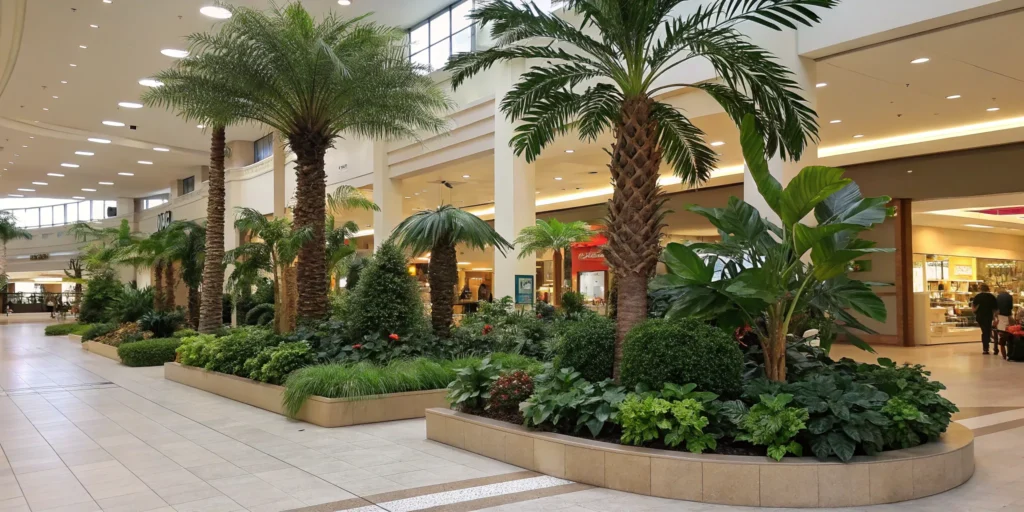
3. High-Traffic or Commercial Environments
Large-scale or busy locations that require a flawless appearance at all times:
- Retail stores and shopping malls
- Hotels, restaurants, and cafés
- Hospitals, clinics, and medical facilities
- Airports, event venues, and exhibition halls
They deliver beauty without the need for watering, trimming, or daily attention.
4. Limited Maintenance Budget or Staffing
Ideal for projects where:
- Maintenance teams are small or unavailable
- Long-term upkeep costs need to be minimized
- Consistent appearance is required with no seasonal changes
5. Large-Scale, Fast Installations
Useful when a project requires:
- Quick visual transformation
- Decoration over large areas
- Tight timelines (events, renovations, new store openings)
6. Busy or Travel-Heavy Lifestyles
Perfect for:
- People who travel frequently
- Busy homeowners,
- Individuals who have repeatedly struggled to keep plants alive
When Are Real Plants Better Than Fake Ones?
Air Quality is the Priority: If the primary goal is improving indoor air health (e.g., in a heavily sealed office).
Therapeutic Value: For gardeners or individuals who find the act of nurturing and caring for a living thing emotionally fulfilling.
Dynamic Ambiance: In spaces where the changing nature of growth and life is desired (e.g., a sunroom or personal study).
What’s New in Artificial Plants for 2025?
The fake plant industry, driven by factory innovation, is undergoing a revolution in material science and design.
Advanced 3D Modeling and Precision Molding
The key to realism is the manufacturing process. At the factory level, leaves and stems are no longer stamped by simple dies.
At the manufacturing level, the process begins with 3D Scanning, where we capture the minute, irregular textures and vein depths of real plants with high precision. This digital data is then fed into Precision Injection Molding machinery, often utilizing complex multi-cavity techniques.
This advanced process allows us to replicate the botanical accuracy of the original specimen, including natural imperfections and asymmetrical growth patterns, resulting in the desired “Real Touch” factor that defines modern quality.
The Rise of “Hyper-Realism” and Biophilic Design
“Hyper-realism” goes beyond basic shape and color. It captures the complex visual cues of real plants. This includes layered color gradients and subtle imperfections, moving away from flat, uniform green. Textures mimic natural matte or glossy finishes accurately.
At FeelReal, our designers intentionally build slight irregularities into leaf and branch angles. This avoids the old “too perfect” look. These realistic details strongly align with biophilic design principles. By echoing natural forms like varied canopy heights and clusters, this visual language provides many psychological benefits, even though the greenery is artificial.
More Customization Options
In 2025, customization has become a key differentiation among factories and brands. Professional buyers are increasingly asking for:
- Specific heights and crown widths tailored to ceiling heights and furniture layouts
- Custom color tones—blue-green, dusty olive, or autumnal gradients—to match interior palettes
- Modular trunk and branch systems that can be assembled on site for easier shipping
- Project-specific plant mixes for brand identity or themed spaces
From a manufacturing standpoint, this requires agile sampling, flexible small-batch production, and closer collaboration between design, tooling, and sales teams. With 20+ years’ of experience, we can respond quickly with realistic prototypes and stable quality for large contracts.
Sustainability and Safer Materials
Sustainability is no longer a niche request; it’s a core requirement:
Safer Polymers: The industry is moving away from low-quality PVC (which can contain harmful phthalates and off-gas VOCs) towards high-grade, food-grade Polyethylene (PE) and advanced, tested polymers.
Certifications: Leading manufacturers ensure compliance with standards like RoHS (restricting hazardous substances) and REACH (EU chemical regulations), guaranteeing safer products for homes and pets.
Smart Artificial Plants
“Smart artificial plants” do not grow, but they can integrate with smart building systems to enhance experience:
Aroma Diffusion: Micro-diffusers can be subtly integrated into the base of the planter to release light, natural scents (e.g., fresh earth or pine), stimulating the sense of smell.
Ambient Lighting: Built-in LED strips can softly illuminate the plant, creating a glowing, focal point effect in low light.

How Do You Pick Quality Faux Plants?
Quality varies drastically in the faux plant market. We, as manufacturers, detail the key differences between genuine realism and low-grade plastic.
1. Look for Natural Realism
Color Gradience: Avoid uniform, bright greens. Look for subtle variations, lighter tips (new growth), and darker bases (mature leaves).
Veining and Imperfections: High-quality leaves will have realistic, ridged veining and deliberate, asymmetrical cuts or holes that mimic natural wear.
2. Check Materials and Texture
The Touch Test (Real Touch): The best faux leaves feel substantial, soft, and slightly pliable, not thin, brittle, or overly glossy. This indicates the use of advanced raw materials.
Matte Finish: A glossy sheen is the quickest giveaway of a cheap plant. Look for a natural, matte, or softly waxed texture.
Run your fingers over the leaves and stems. Excessively shiny, rigid, or overly smooth surfaces usually look cheap in real environments and under strong lighting.
3. Examine Details and Construction
Quality is often visible in the details:
Stems and Trunks: Stems should be multi-toned, slightly textured, and vary in thickness. Trunks on larger trees should have a realistic, rough, and multi-colored bark-like texture.
Flexibility: High-quality stems contain flexible wire cores, allowing you to naturally shape the plant and branches.
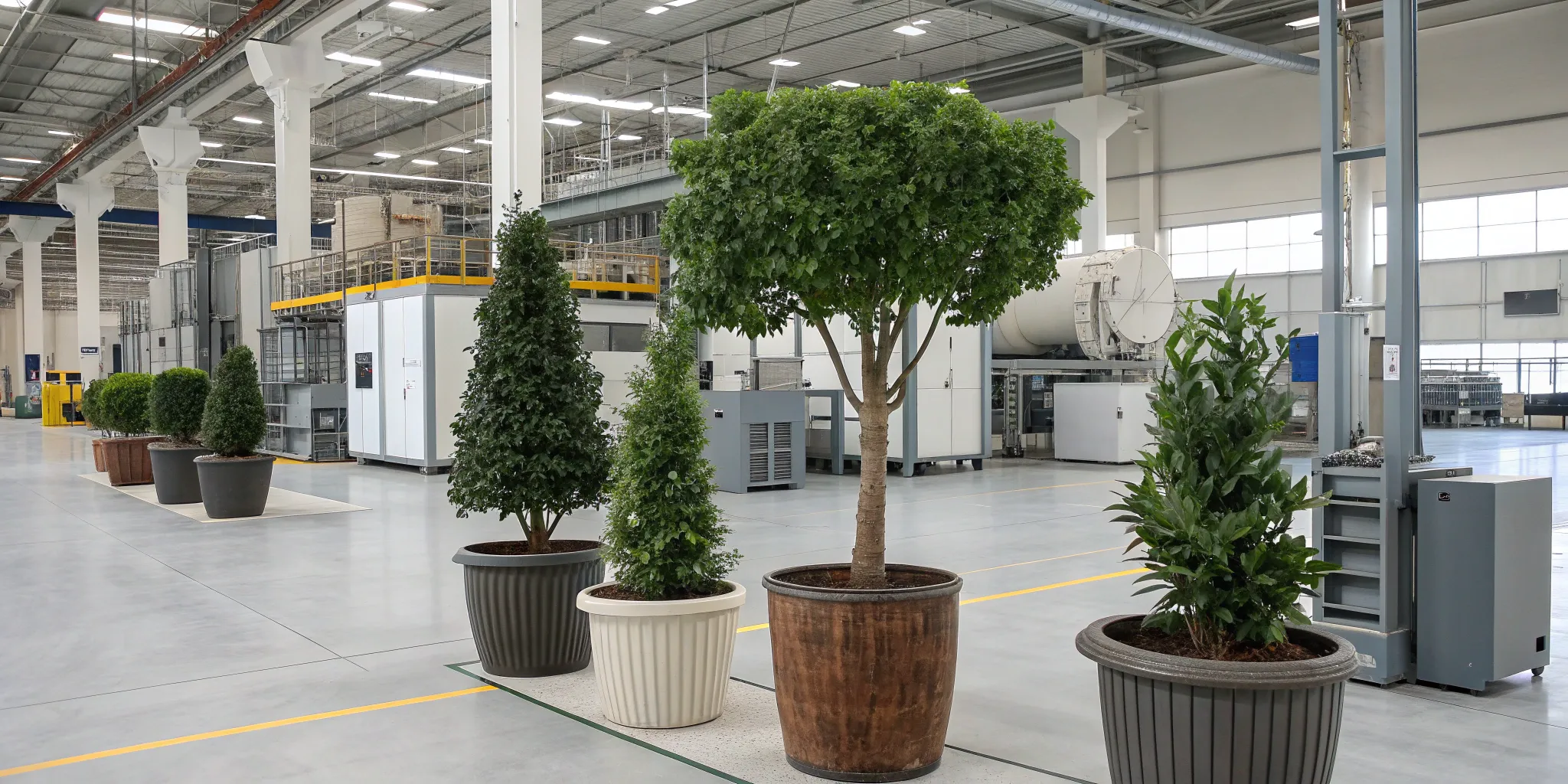
4. Pay Attention to the Planter and Base
For premium projects, real stone, wood veneer, or high-grade composite planters elevate the whole piece
Artificial moss, stones, or bark textures around the base hide foam and weighting materials
Sturdy internal weighting or cross-bracing is crucial for tall plants in high-traffic areas
5. Check for UV Protection and Durability
If you plan to use faux plants outdoors, look for “UV-Rated” or “UV-Stabilized” descriptions. This means the polymer was injected with a UV-inhibitor during manufacturing, ensuring the color resists fading.
Good UV-resistant products may cost more but will keep their color and mechanical strength much longer. Indoor-only plants used outdoors often fade or become brittle within one or two seasons.
Frequently Asked Questions about Artificial Plants:
1. How do you care for fake plants?
Care focuses primarily on dust control and occasional reshaping. For routine cleaning, use a soft brush, a microfiber cloth, or a gentle vacuum attachment. For deep cleaning, wipe the leaves with a damp cloth and a mild soap solution, taking care not to soak any fabric parts or unsealed internal metal wires. Finally, check and straighten leaves periodically to ensure the plant retains its intended natural outline and structure.
2. Are fake plants tacky in home decor?
Forget the dated plastic look. While low-quality fake plants appear cheap, modern high-end faux plants are a sophisticated design solution. They look professional in minimalist or contemporary settings when chosen for their realism and correct proportion. The key is to treat them as deliberate decor, ensuring perfect integration with the overall interior design..
3. Do artificial plants attract bugs or spiders?
No, artificial plants do not attract bugs or spiders for feeding or nesting as they offer no food source (pollen, sap) or organic material. They can, however, provide incidental shelter, just like any furniture or decor item.
4. How long do high-quality fake plants last?
High-quality, indoor-grade plants can last 5-10 years or more with proper dusting. UV-rated outdoor plants are typically warrantied to last 3-5 years without significant fading.
5. Can I put fake plants outside?
Yes, but only if they are explicitly UV-Rated. Standard indoor artificial plants will fade, crack, and become brittle within a few months of continuous sun exposure. Always choose products with guaranteed UV stabilization for outdoor use.
About FeelReal Artificial Plants
At FeelReal Artificial Plants, we are not just manufacturers; we are pioneers in the science of botanical replication. Our commitment is to bridge the gap between nature and interior design, leveraging our state-of-the-art facilities and proprietary polymer science to create the next generation of hyper-realistic greenery.
We specialize in advanced techniques like 3D precision molding and multi-layered UV stabilization, ensuring our products not only look indistinguishable from real life but also meet the strictest RoHS and REACH standards for safety and sustainability.
Our mission is clear: to offer designers and homeowners a certified, non-toxic, and maintenance-free connection to the biophilic aesthetic, delivering a permanent, flawless solution for any challenging environment. Choose FeelReal for lasting quality where craftsmanship, innovation, and natural beauty come together.