
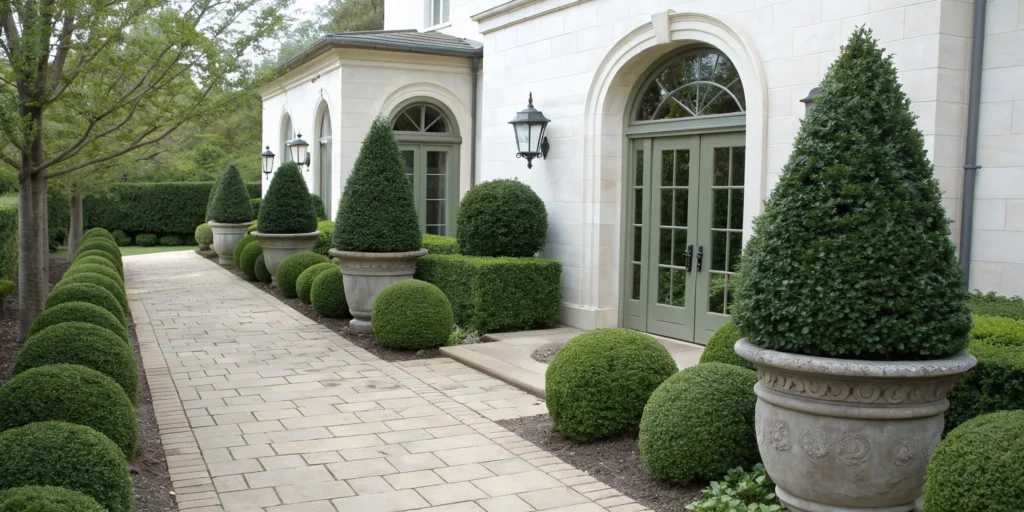
Boxwood topiary adds structure in gardens, entrances, homes and commercial landscapes. Designers use it to create symmetry, order, and an elegant look. Property managers rely on it to maintain visual standards.
Real boxwood topiary delivers classic beauty, but it also brings ongoing maintenance challenges. keeping them in perfect geometric shape requires constant caring and expert knowledge. Care mistakes can ruin a plant that took years to grow.
We’ll walk you through everything about boxwood topiary care. And, we’ll show you a smarter alternative delivering the same stunning visual impact without the headaches.
Essential Dos for Boxwood Topiary Success
Professional results require a proactive approach. Follow these essential rules to keep your living topiaries in good condition.
Do Choose the Right Location and Lighting Conditions
Boxwoods topiary prefer a balance of light. Full sun scorches the foliage and stresses the plant. Complete shade creates weak and ruins your topiary shape. Find a spot with gentle morning sun and afternoon shade for the best results.
Do Invest in Professional-Grade Pruning Tools
Dull blades tear the plant tissue. Torn leaves will turn brown. Buy high-quality bypass pruners and sharp topiary shears. Professional tools create clean, quick-healing cuts.
Do Establish a Consistent Trimming Schedule
Boxwoods need trimming 2-3 times per growing season. Late spring and early autumn are the best times. Skipping regular trimming allows plants to grow out of shape. It is much easier to maintain an existing shape than to fix a neglected one.
Do Water Deeply and Regularly During Growing Season
Boxwood roots are shallow and dry out fast. Apply water directly to the base of the plant. Shallow watering creates weak root systems.
Do Apply Proper Fertilization Techniques
Feed boxwoods in early spring with a balanced, slow-release fertilizer. A 10-10-10 formula works well for most situations. A second light feeding in early summer supports continued growth. Stop fertilizing by August. new growth cannot survive winter frost. Overfed boxwoods grow too quickly and lose their dense structure.
Do Use Quality Soil with Excellent Drainage
Boxwoods hate wet feet. They need well-draining soil. They will die in standing water. Ensure your soil is rich in organic matter and drains quickly. If you use planters, check that the drainage holes remain clear.
Do Protect from Harsh Winter Conditions
Cold wind damages exposed foliage. Use wind barriers or burlap wraps. Winter protection reduces browning and dieback.
Do Monitor for Pests and Diseases Early
Check your topiaries weekly every week. Look for yellow spots or thinning patches. Boxwood Leafminers and Boxwood Blight can destroy a collection in weeks. Early detection allows for effective treatment with professional fungicides or oils.
Do Start Shaping When Plants Are Young
Begin training boxwoods to their final shape within the first year. Young plants respond better to pruning and fill in quickly. Established plants resist dramatic shape changes.
Use wire frames or templates to maintain consistent shapes across multiple plants. Remove no more than one-third of growth in any single session. Patience creates better results than aggressive pruning.
Critical Don’ts That Damage Boxwood Topiaries
Mistakes with boxwood topiaries are often permanent. Avoid these common pitfalls to protect your plant.
Don’t Over-Prune or Cut Too Aggressively
Never remove more than one-third of the foliage in a single session. Removing too much foliage at once shocks plants. They respond with weak, leggy growth or simply die. Multiple light trims always beat one heavy pruning.
Don’t Trim During Extreme Heat or Cold
Pruning during hot weather stresses plants. Fresh cuts lose moisture rapidly in heat. Never prune after late summer. Winter kills this tender growth, leaving dead patches. Spring pruning allows maximum recovery time before the next winter.
Don’t Overwater or Allow Waterlogged Soil
Soggy soil is the leading cause of boxwood death. If the soil looks muddy, stop watering. Let soil dry slightly between waterings. Stick your finger into the soil—if it feels moist, skip watering.
Don’t Neglect Mulching and Root Protection
Bare soil around boxwoods compacts easily and dries out quickly. Proper mulching regulates soil temperature, retains moisture. Use 2-3 inches of organic mulch but keep it away from stems.
Don’t Forget Seasonal Feeding Requirements
A hungry boxwood loses its dense, green look. If you skip fertilization, the plant struggles to recover from pruning. Maintain a regular feeding cycle to ensure professional results.
Common Issues With Real Boxwood Topiary
Even with perfect care, real boxwoods face significant risks:
Boxwood Blight: A devastating fungal disease with no easy cure. It often requires the removal of the entire plant.
Winter Bronzing: Harsh winds and winter sun cause bronzing and dieback. Plants take months to recover their appearance. Some damage proves permanent, requiring complete plant replacement.
High Labor Costs: Keeping a geometric shape requires monthly professional attention. This adds thousands of dollars to annual maintenance budgets.
Why Professionals Are Switching to Artificial Boxwood Topiaries?
Because of these risks, many project managers and business owners now choose high-quality faux boxwood topiaries. It is a smart, cost-effective management decision.
Eliminating All Maintenance Challenges
Artificial topiaries don’t get sick. You never need to spray chemicals or worry about blight. They stay the same size and shape forever without any effort.
Guaranteed Year-Round Consistency
Real plants change with the weather. Fake boxwoods keep premium appearance 365 days a year. This is vital for for commercial properties. Hotels never worry about dead plants. Retail centers maintain perfect curb appeal during shopping seasons. Office buildings project professionalism constantly.
No Watering, Pruning, or Fertilizing Required
Artificial boxwood topiaries remove all routine plant care. You do not schedule watering or manage irrigation systems. Avoid ongoing pruning labor and seasonal shaping. You can also eliminate fertilizer planning and soil monitoring. This reduces maintenance cost and staffing needs. It also keeps every topiary looking uniform across all locations, all year.
Zero Risk of Disease or Pest Problems
Boxwood blight can’t affect plastic Boxwood topiaries. Winter damage becomes impossible. Pest infestations will not happen. You eliminate these devastating problems completely.
Superior ROI for Commercial Properties
Imitation boxwood topiaries reduce long-term operating costs. They eliminate ongoing expenses for watering, pruning, fertilizing, and plant replacement. Labor needs stay low across multiple locations. Their appearance remains consistent without seasonal decline.
Conclusion: FeelReal Artificial Boxwood Topiary—The Most Realistic Solution
Professional landscapes demand consistency, efficiency, and visual impact. Natural boxwood topiary delivers tradition, but it requires constant maintenance. Faux boxwood topiary solves these issues without sacrificing aesthetics.
FeelReal artificial boxwood topiaries focus on realism and durability. High leaf density creates a natural look. Stable structures hold shape. UV-resistant materials support outdoor use. Custom sizes fit planters and entrances with precision.
Contact FeelReal today for a wholesale quote and secure the best greenery for your next project!