
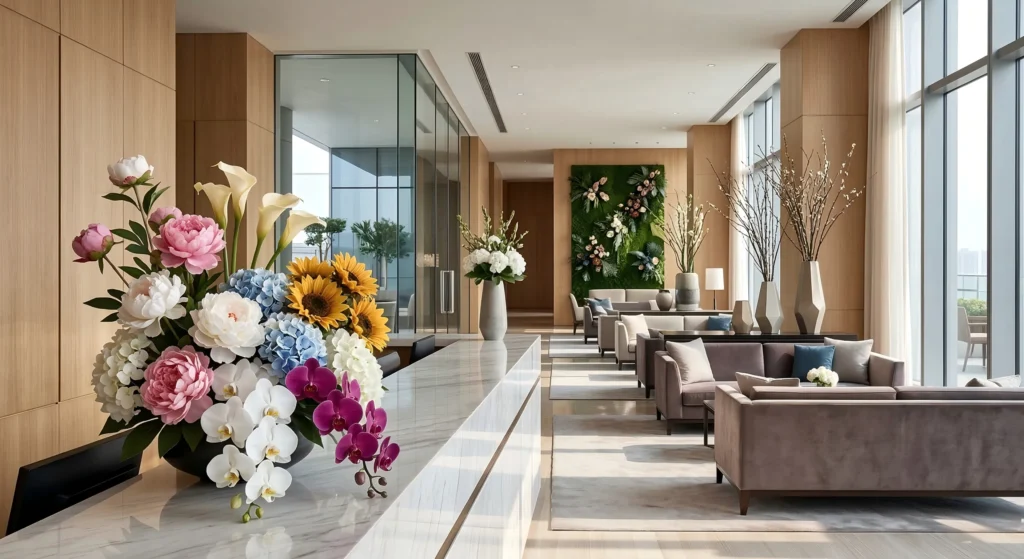
Flowers carry meaning across cultures. For centuries, people have used them to express emotions, celebrate important events, and decorate spaces. Each flower type represents a unique message. They symbolize love, romance, friendship, prosperity, or remembrance.
Today, these meanings still influence how people choose flowers for homes, weddings, hotels, offices, and public spaces. In this guide, we explore popular flower types and their meanings. We also explain how flower symbolism influences modern decoration and how artificial flowers can preserve these meanings for long-term use.
What Is the Language of Flowers?
The Victorian Origins of Floriography
The practice of assigning meaning to flowers has roots across multiple civilizations. Ancient Egyptians, Greeks, and Romans all used flowers in rituals with specific symbolic intent. But the most systematic development of floral language happened during the Victorian era in 19th-century England.
Flowers became a solution. People sent bouquets called tussie-mussies as coded messages. A red rose meant passionate love. Yellow roses signaled jealousy or friendship depending on context. A white lily communicated purity. These codes gave people a private language in an era that demanded public composure.
Why Flower Symbolism Still Matters Today
The Victorian language of flowers never fully disappeared. It evolved.
Today, floral symbolism operates on two levels. On a personal level, people still choose wedding bouquets, sympathy arrangements, and birthday flowers based on meaning. On a commercial level, businesses use flowers — or flower imagery — to communicate brand values, create atmosphere, and trigger emotional responses.
A luxury hotel that fills its lobby with white orchids sends a very different signal than one that fills the same space with yellow sunflowers. Both choices are valid. Both communicate something specific.
How Different Cultures Interpret the Same Flower
Flower symbolism can vary greatly across cultures. The same flower may carry completely different meanings depending on historical traditions and social context.
The chrysanthemum symbolizes longevity and honor in many East Asian cultures. But, in several European countries, white chrysanthemums are closely associated with funerals and remembrance.
Red roses represent romantic love and passion in Western cultures. In many South Asian traditions, they are also widely used in celebrations.
The lotus is sacred in Buddhist and Hindu traditions. It represents spiritual purity and enlightenment. In modern Western contexts, it is often used mainly as a decorative element.
The 15 Most Popular Flower Types and Their Meanings
1. Rose – The Universal Symbol of Love
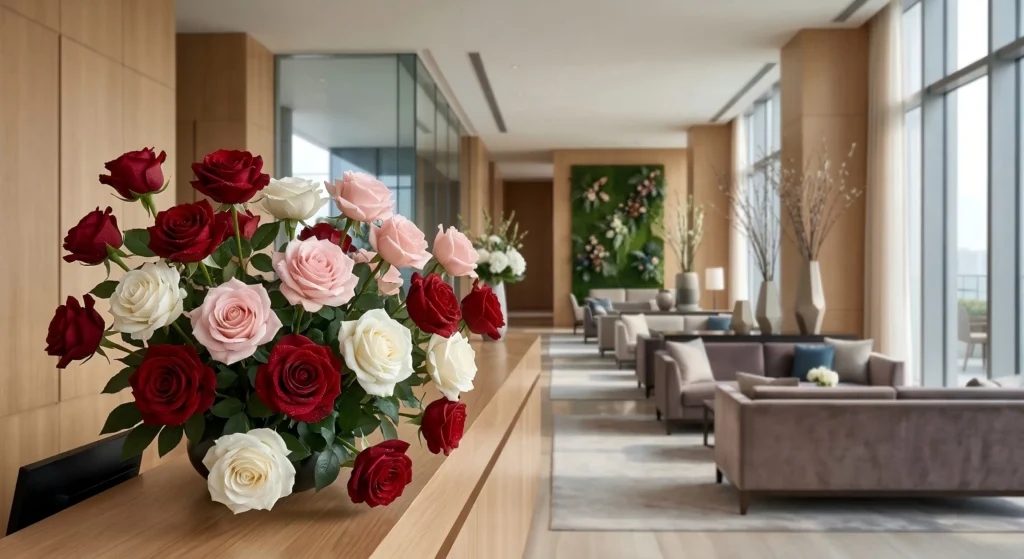
The rose is the most widely recognized flower in the world. Red roses communicate passionate love and desire. Pink roses express admiration and gratitude. White roses stand for purity, new beginnings, and remembrance. Yellow roses traditionally signal friendship, though in some cultures they carry associations with jealousy.
In commercial settings, roses carry weight. They are appropriate for wedding venues, bridal suites, and romantic restaurant spaces.
2. Lily – Purity, Elegance, and Renewal
Lilies often symbolize purity, renewal, and devotion. They appear at weddings, funerals, religious ceremonies, and high-end hospitality environments. The calla lily in particular has become synonymous with refined elegance.
Lilies work exceptionally well in hotel lobbies, spas, and wellness spaces — any environment that needs to communicate calm and sophistication.
3. Orchid – Luxury, Refinement, and Strength
Orchids are the preferred flower of luxury hospitality worldwide. The Phalaenopsis orchid signals refinement, attention to detail, and quiet confidence.
In ancient Greek culture, orchids were associated with virility and fertility. In modern design, they project exclusivity. Walk into the lobby of any five-star hotel and you will almost certainly find orchids. They require specific care, which makes them a traditional marker of resources and attentiveness in a host.
4. Peony – Prosperity, Romance, and Good Fortune
The peony holds the title of “king of flowers” in Chinese culture. It symbolizes wealth, honor, and a life of abundance. In Western traditions, the peony signals romance, beauty, and happy marriages.
For hotel and hospitality brands targeting both Eastern and Western clientele, the peony is one of the safest and most powerful symbolic choices available. It carries positive connotations across multiple major markets.
5. Tulip – Declaration of Love and Spring Renewal
Tulips are native to Central Asia. They became highly valued in Persian and Ottoman cultures long before they were introduced to Europe. Red tulips traditionally mean a declaration of love. Yellow tulips signal cheerful thoughts. Purple tulips represent royalty and admiration.
Tulips communicate freshness, seasonal vitality, and approachability. They are ideal for retail displays, spring campaigns, and spaces targeting family audiences.
6. Sunflower – Happiness, Loyalty, and Warmth
Sunflowers turn to face the sun. This behavior made them natural symbols of loyalty, devotion, and positivity across cultures. In native American traditions, the sunflower represented harvest and provision. In modern Western contexts, it signals joy, energy, and an uplifting environment.
Casual restaurants, children’s retail, wellness brands — benefit strongly from sunflower imagery and displays.
7. Hydrangea – Heartfelt Emotions and Gratitude
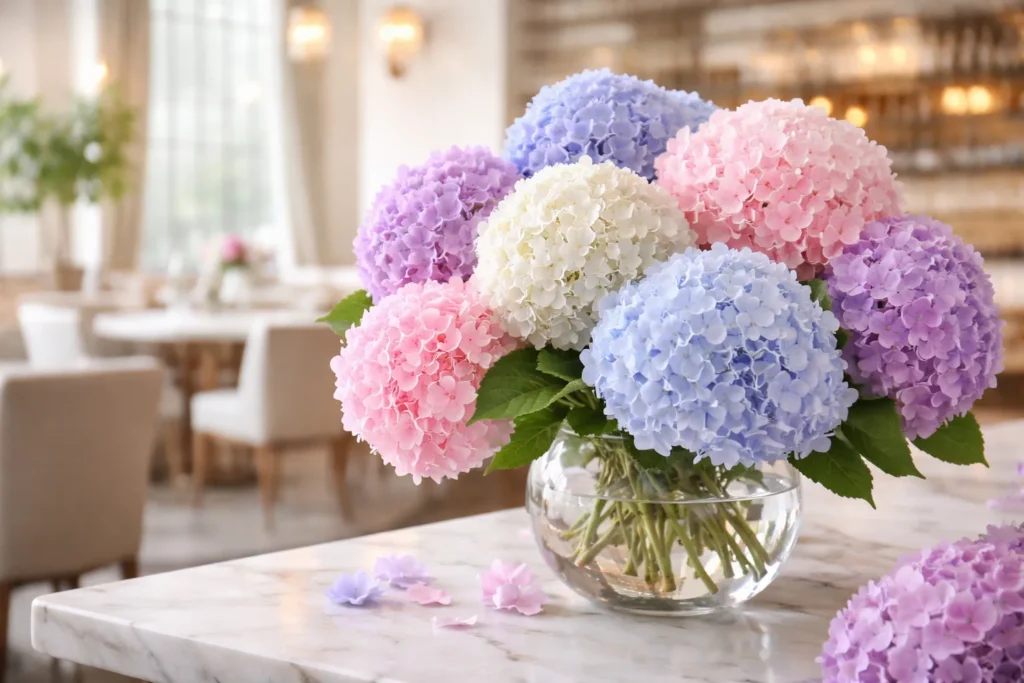
Hydrangeas are complex in their symbolism. In Japan, they carry associations with apology and sincere emotion. In Western traditions, they signal heartfelt gratitude, abundance, and understanding.
Their full, lush appearance makes them popular in restaurant table arrangements and retail window displays.
8. Cherry Blossom – Transience, Beauty, and New Beginnings
The cherry blossom (sakura) is one of the most culturally loaded flowers in existence. In Japanese philosophy, it captures the concept of mono no aware — the bittersweet awareness of life’s transience. Cherry blossoms bloom explosively for a short time and then fall. That cycle of beauty and impermanence gives them enormous symbolic power.
Cherry blossoms communicate elegance, spring, new beginnings, and East Asian cultural appreciation. They are extremely popular in hospitality projects targeting Asian markets, as well as in spring seasonal campaigns globally.
9. Lotus – Spiritual Purity and Resilience
The lotus grows through muddy water and emerges clean. That journey makes it a universal symbol of purity, perseverance, and spiritual transformation in Buddhist, Hindu, and Egyptian traditions.
In modern design, the lotus works well in spa environments, meditation spaces, wellness hotels, and health-focused brands. It signals inner peace and the ability to rise above difficult conditions.
10. Lavender – Serenity, Devotion, and Calm
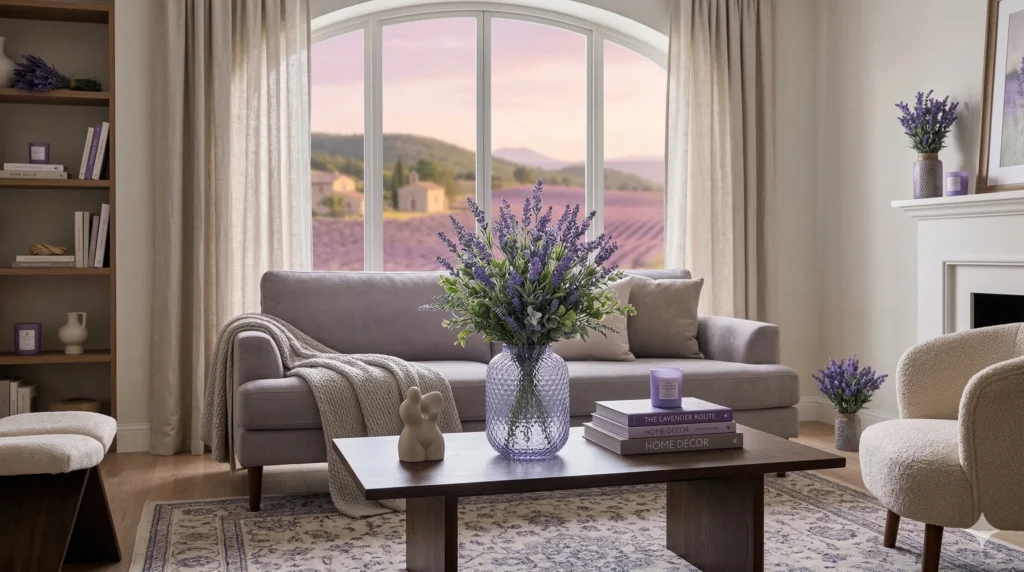
Lavender blends the purity of white and the passion of red into something gentle and balanced. It has long been associated with devotion, grace, and quiet refinement.
As a fragrance, lavender is globally recognized for its calming properties. As a visual symbol, it carries the same associations. Lavender blooms work well in spa environments, wellness centers, and bedrooms.
11. Chrysanthemum – Longevity, Joy, and Mourning (by Region)
The chrysanthemum is a particularly important flower to understand culturally. In China and Japan, it represents longevity, rejuvenation, and nobility. The Japanese imperial family uses a chrysanthemum as their official emblem.
In several European countries, including France, Belgium, Austria, and parts of Italy, white chrysanthemums are strongly associated with funerals and remembrance.
12. Daisy – Innocence, Simplicity, and Cheerfulness
Daisies are the anti-statement flower. They do not project luxury or gravity. They communicate lightness, approachability, and unpretentious warmth. In the language of flowers, daisies represent innocence and loyal love.
They work well in casual retail, children’s environments, outdoor café settings, and any brand positioning that wants to feel friendly rather than formal.
13. Carnation – Admiration, Fascination, and Distinction
Carnations carry layered symbolism. Red carnations signal deep love and admiration. Pink carnations represent a mother’s undying love. They are strongly associated with Mother’s Day globally. White carnations signal pure love and good luck. Yellow carnations, interestingly, carry negative associations with disappointment or rejection in many Western traditions.
Despite their humble reputation in some markets, carnations are among the most durable and versatile flowers available.
14. Jasmine – Grace, Sensuality, and Hospitality
Jasmine is deeply tied to hospitality in Middle Eastern, South Asian, and Southeast Asian cultures. In many regions, offering jasmine to a guest is a traditional sign of welcome and respect. In Hindu traditions, jasmine is used in religious ceremonies and garlands.
Its soft white blooms and intoxicating fragrance make jasmine a natural symbol of grace.
15. Bird of Paradise – Freedom, Joy, and Magnificence
The bird of paradise flower is named for its resemblance to a tropical bird in flight. It symbolizes freedom, joy, and the kind of magnificence that commands attention.
It works in large hotel lobbies, high-concept retail flagships, and event spaces where bold visual impact is required. It projects confidence and a distinct personality — not subtle, but deliberately striking.

Flower Color Meanings: What Different Colors Symbolize
Color plays a major role in flower symbolism. The same flower can carry different meanings depending on its color.
| Flower Color | Primary Symbolism | Emotional Resonance | Commercial & Professional Use | Common Examples |
| Red | Passion & Power | Love, romance, courage, deep emotion, and confidence. | Restaurants/Bars: To create romantic intimacy. Retail: To project boldness and energy. | Roses, Tulips, Amaryllis |
| White | Purity & Peace | Sincerity, remembrance, cleanliness, and new beginnings. | Luxury Hospitality: Communicates sophistication without cultural risk. Weddings: Signals tradition. | Lilies, Roses, Jasmine |
| Yellow | Joy & Optimism | Friendship, energy, positivity, and warmth. | Retail/F&B: Creates an immediate sense of approachability. Great for high-energy public spaces. | Sunflowers, Daffodils, Mimosas |
| Pink | Gratitude & Grace | Affection, admiration, kindness, and gentle appreciation. | Wellness/Beauty: Ideal for interiors seeking a soft, caring touch. Versatile for hospitality and weddings. | Peonies, Carnations, Dahlias |
| Purple | Royalty & Dignity | Luxury, prestige, creativity, and upmarket positioning. | Premium Brands: Reinforces an elite status. Ideal for high-end hotel lobbies and creative studios. | Lavender, Orchids, Irises |
| Blue | Trust & Tranquility | Calm, mystery, distinctiveness, and reliability. | Spas/Offices: Perfect for stress-reduction environments. Signals a stable and trustworthy brand. | Hydrangeas, Delphiniums |
| Orange | Warmth & Vitality | Enthusiasm, creativity, and generous energy. | Creative Agencies: Boosts imagination. Casual Dining: Encourages social interaction and appetite. | Gerbera Daisies, Poppies |
The Essential Guide to Floral Meanings & Occasions
Choosing the right flower goes beyond beauty—it communicates a message. Different occasions call for different flowers, colors, and arrangements. Understanding the symbolic meaning of flowers can help you express love, friendship, sympathy, or celebration appropriately.
| Occasion | Strategic Flower Choices | Core Symbolism & Impact | Why It Works |
| Love & Romance | Red Roses, Red Tulips, Peonies, Orchids | Passion, deep commitment, desire, and rare beauty. | Red Roses remain the ultimate icon of enduring love. Peonies signal a happy marriage and prosperity. |
| Friendship & Gratitude | Sunflowers, Yellow Roses, Daisies, Freesia | Joy, loyalty, optimism, and “thinking of you.” | Yellow Roses celebrate platonic bonds without romantic confusion. Sunflowers project warmth and energy. |
| Sympathy & Memorial | White Lilies, White Roses, Chrysanthemums | Peace, purity, remembrance, and eternal rest. | Lilies symbolize the restored innocence of the soul. Chrysanthemums represent grief and honor in many cultures. |
| Celebrations & Success | Hydrangeas, Orchids, Gladiolus, Poppies | Prosperity, abundance, strength, and high achievement. | Hydrangeas represent heartfelt emotion and abundance. Orchids signal exotic luxury and professional refinement. |
| New Beginnings | Daffodils, Daisies, White Tulips | Rebirth, hope, innocence, and fresh starts. | Daffodils are the first sign of spring, making them perfect for new jobs, new homes, or recovery. |
| Apology & Sincerity | White Hyacinth, Blue Star, White Tulips | Humility, forgiveness, and honest communication. | White Tulips carry a message of worthiness and are the standard choice for a sincere “I’m sorry.” |
Real vs. Artificial Flowers: Which Best Delivers the Right Message?
Choosing flowers is not just about beauty—it’s about delivering the right message consistently. Fresh flowers make a strong impression in the first few days. Their colors, fragrance, and shape perfectly convey love, friendship, or celebration. However, after a week or two, petals wilt, edges brown, and fragrance fades. In commercial environments like hotels, offices, or event spaces, this rapid degradation can undermine the intended symbolism.
High-quality artificial flowers solve this problem. They maintain their shape, color, and symbolic impact from day one to years later. They require no watering, sunlight, or special care, yet continue to convey the same meaning as fresh flowers. Their long lifespan and low maintenance make them a practical and professional choice for commercial decoration.
This is why artificial flowers have become increasingly popular for modern spaces. They allow businesses to enjoy the beauty and symbolic meaning of flowers without the limitations of fresh plants.
FAQ About Long-Lasting Flower Solutions
1. Do artificial flowers carry the same symbolism as real flowers?
Yes. Artificial flowers share the same symbolic meanings as natural ones. Their language is defined by visual form and color rather than lifespan. Premium permanent botanicals are often superior because they maintain this symbolism 24/7. While fresh flowers wilt, high-quality silk florals remain in full bloom, representing a consistent, successful, and reliable brand image in any professional setting.
2: Are artificial flowers suitable for high-traffic commercial spaces?
Yes, artificial flowers can be used in high-traffic environments like hotel lobbies, retail malls, and airports. Unlike fresh flowers, high-quality silk or Real-Touch botanicals maintain their shape and vibrant colors without wilting.
3: What are the best flowers for a modern, minimalist office design?
For minimalist spaces, “less is more.” Calla Lilies are highly recommended for their clean lines and architectural silhouettes. They symbolize modern sophistication and focused energy, aligning perfectly with contemporary tech firms or architectural studios that prioritize a clutter-free, professional aesthetic.
4: Are there fire-retardant artificial flowers for indoor commercial compliance?
Yes. For large-scale commercial projects, meeting local fire safety codes (such as NFPA 701 or local building regulations) is a priority. Inherently fire-retardant (IFR) artificial flowers have flame-retardant chemicals infused directly into the fabric or plastic during production. They meet indoor commercial fire safety standards. These flowers are ideal for hotels, offices, retail spaces, and event venues.
5. Can artificial flowers be used outdoors?
Yes, high-quality artificial flowers can be used outdoors. They are made from UV-resistant materials. This keeps their color, shape, and symbolic meaning even under sun, rain, or wind. They are ideal for hotels, resorts, gardens, and event venues.
Final Thought: Maximize Design Impact with Flower Meanings
Flowers have carried symbolic meaning for centuries. Different flower types express emotions such as love, friendship, gratitude, and remembrance.
Understanding flower symbolism helps you select the right flowers for important moments and decorative spaces.
Today, artificial flowers make it possible to enjoy these meanings without worrying about maintenance or seasonal limitations. High-quality artificial flowers maintain their beauty for years while preserving the symbolic messages that flowers represent.
At FeelReal, we specialize in high-performance artificial flower and plant solutions for indoor and outdoor decoration. Whether you are designing for a luxury hotel, a global retail chain, or a corporate office, our custom greenery ensures your space reflects excellence every day.
Contact us today to discuss your project requirements and receive a tailored quote.
