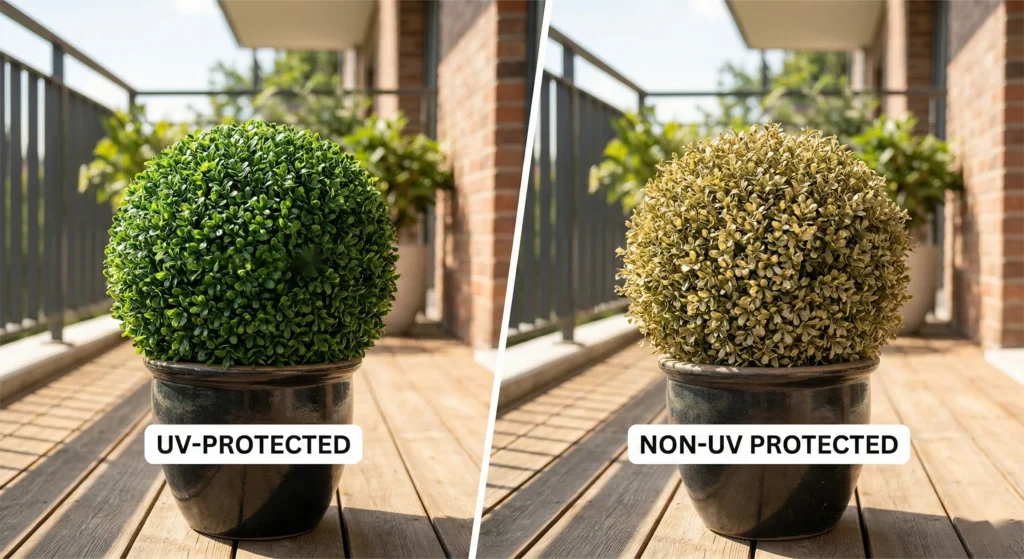
When sourcing artificial plants, the difference between UV protected and non-UV plants directly affects project lifespan and cost.
UV protected artificial plants with UV stabilizers or coatings can resist sun damage. They are suitable for outdoor use. Non-UV artificial plants will fade, crack, or become brittle under prolonged sun exposure.
As a manufacturer deeply involved in commercial artificial plant production and outdoor engineering projects, we’ve seen firsthand how UV technology determines performance in real-world installations. This guide gives you the technical knowledge to make the right sourcing decisions.
What Does “UV Protection” in Artificial Plants Actually Mean?
Most people assume UV protection is a simple spray or coating. It is not in high-quality plants.
Real UV protection starts at the raw material stage. During manufacturing, UV stabilizers/UV absorbers are blended directly into the base polymer — typically polyethylene (PE). These anti-UV compounds become part of the material’s molecular structure.
At FeelReal, every leaf and every stem carries built-in protection from the inside out. It can’t wash off. It doesn’t wear down. It works well for 3-5 years outdoors.
This is fundamentally different from a surface UV spray. A spray sits on top of the material. Rain can erode it. UV exposure can degrade it. Within 6–12 months, the coating is gone — and the unprotected base material starts failing.
Why Do Non-UV Plants Fail Outdoors?
Think of ultraviolet radiation as a relentless chemical assault on your greenery. Standard artificial plants are crafted from raw polymers like polyethylene (PE). Without specialized UV-resistant additives, sunlight triggers a destructive process known as photo-oxidation, which systematically severs the plastic’s molecular bonds.
The results of this chemical breakdown are fast and devastating:
1. Pigment Fades
Sunlight acts like invisible bleach. UV rays actively attack the color molecules inside the plastic. The bright, rich colors simply break down and disappear.
2. Leaves Turn Pale
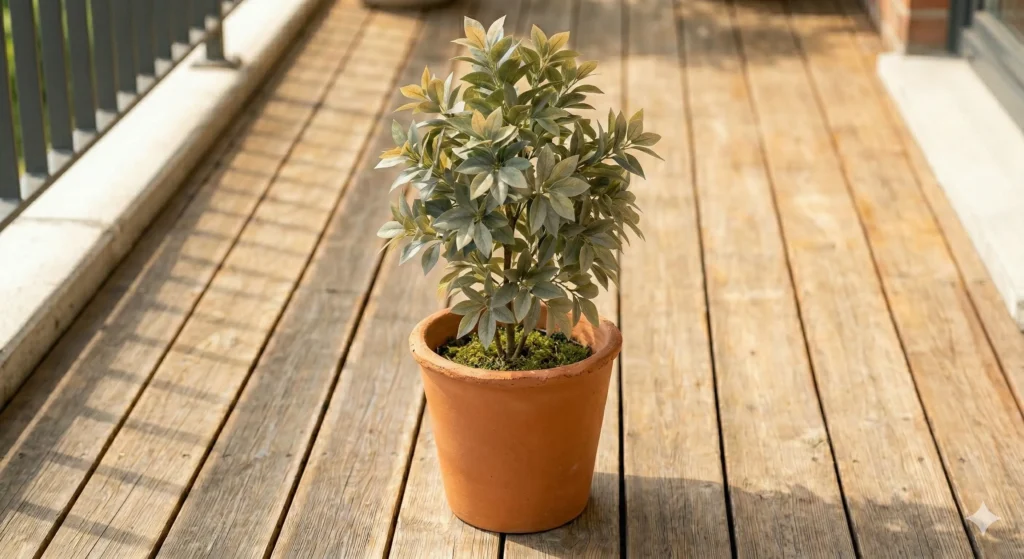
As the color drops out, the plant loses its lifelike look. The lush greens turn into a sickly, washed-out yellow or dull gray. The plant quickly looks old and fake.
3. Plastic Becomes Brittle
The sun bakes the plastic and steals its flexibility. The material loses its natural, soft bounce. Instead of bending smoothly, the faux leaves turn stiff and hard.
4. Edges Start Cracking
Hard plastic cannot survive outdoor weather. The thin edges of the leaves split open first. Eventually, the rigid leaves shatter. Just one strong wind can snap them off the stem completely.
UV Protected vs Non-UV: The Complete Comparison
Choosing between UV and standard artificial plants is the most critical decision for any outdoor project. Here is the exact technical and commercial breakdown:
1. Raw Material Structure
UV Protected Plants:
- UV stabilizers are blended directly into the base polymer.
- The protection runs through the entire leaf structure.
- Outdoor-grade pigments are selected to resist UV bleaching.
- Material remains stable under long-term sun exposure.
Non-UV Plants
- Standard PVC, silk, or polyester materials.
- No UV stabilizers inside the polymer.
- Higher risk of brittleness and structural weakening.
2. Manufacturing Technology
UV Protected Plants
- Premium UV inhibitors are injected into raw PE resin before molding.
- The compound blends completely prior to leaf formation.
- Protection becomes permanent inside the plastic core.
Non-UV Plants
- Basic plastic molding or fabric assembly.
- No UV formula blending process.
- Surface treatments wear off quickly under rain and heat.

3. The Science of Sun Resistance
UV Protected Plants
- Built-in stabilizers absorb and neutralize ultraviolet radiation.
- They slow molecular chain breakdown.
- They reduce pigment degradation.
- The plastic maintains structural integrity for years.
Non-UV Plants
- UV radiation directly attacks the raw polymer.
- Chemical bonds break under solar exposure.
4. Color Retention
UV Protected Plants
- Pigments remain locked inside stabilized polymer.
- Color fades gradually over 3–5 years, depending on climate.
- Green tones stay balanced and natural.
- Better long-term visual consistency.
Non-UV Plants
- Sunlight directly damages exposed pigments.
- Color fades unevenly.
- Leaves may turn pale, chalky, or yellowish.
- Visible fading can appear within 3–6 months in high UV regions.
5. Structural Strength
UV Protected Plants
- Material maintains flexibility.
- Leaves bend under wind without cracking.
- Better resistance to heat expansion and cold contraction.
- Suitable for rooftop, coastal, and open-area installations.
Non-UV Plants
- Plastic loses flexibility over time.
- Leaves stiffen and become brittle.
- Edges crack under stress.
- Higher breakage risk in outdoor environments.
| Factor | UV Protected | Non-UV |
| Outdoor lifespan | 5–10+ years | 3–6 months |
| Color stability | Stable, no hue shift | Fades to yellow, blue, or grey cast |
| Leaf flexibility | Maintains softness long-term | Becomes brittle, cracks at stem bends |
| Surface texture | Stays matte-natural | Turns chalky or powdery |
| Suitable environments | Full sun, coastal, tropical, desert | Indoor or fully shaded areas only |
How Long Do UV Protected Artificial Plants Last?
The lifespan of artificial greenery depends on two things: the quality of the UV inhibitors and the intensity of the local sun.
Based on real global data, here is what you can expect:
High-Exposure Regions (Dubai, Arizona, Australia): In these “UV hotspots,” high-quality inherent plants typically last 2 to 3 years before any noticeable fading begins.
Moderate Climates (Europe, Northern USA): In regions with four seasons and moderate sun, you can expect 3 to 5 years of vibrant color.
Shaded Outdoor Areas: If your plants sit under a canopy or north-facing wall, they can easily maintain their look for over 8 years.
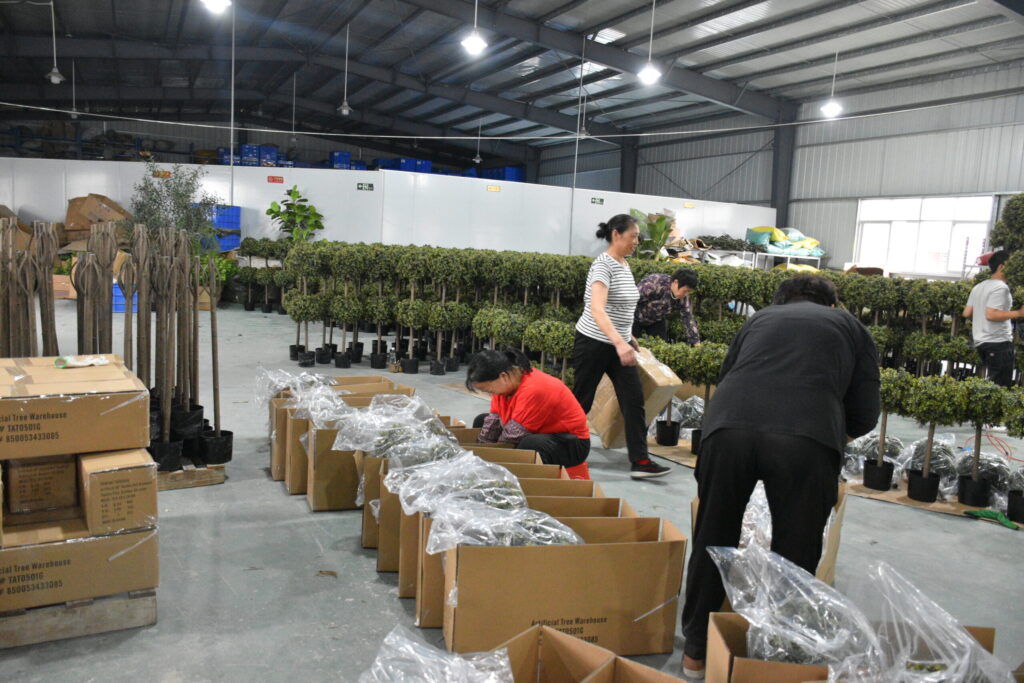
Beyond the UV stabilizers, we also look at the Material. At our factory, we use 100% Virgin PE. Unlike recycled plastic, Virgin PE doesn’t have “micro-cracks” that allow UV rays to penetrate deeper and faster.
When Should You Choose UV Protected Artificial Plants?
Not every project needs the highest level of UV protection. If you are decorating a dark basement, standard plants work fine. However, in specific commercial scenarios, UV resistance is a mandatory requirement.
Through years of partnering with professional landscapers and designers, we know durability is your top priority. We also know exactly which projects demand UV protection.
1. Luxury Hospitality & Hotels
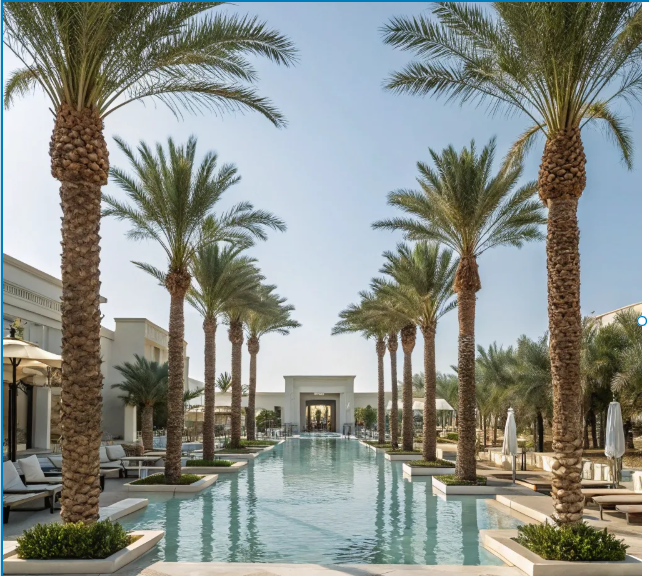
First impressions mean everything. Five-star hotels, luxury resorts, and country clubs use lush greenery to welcome guests. A faded plastic hedge instantly ruins that premium vibe. UV-protected plants keep hotel entrances, pool cabanas, and outdoor dining areas looking expensive and flawless year-round.
2. High-End Residential Properties
Luxury homeowners want stunning backyards without the daily yard work. Landscape designers use premium artificial hedges to create instant privacy around custom pools, rooftop terraces, and private patios. Built-in UV protection ensures these upscale homes stay perfectly green year after year.
3. Commercial Facades & Restaurant Patios
Retail storefronts and bustling cafes rely on strong curb appeal. A vibrant green wall grabs attention and pulls customers inside. Standard plants quickly bleach under the street sun and look cheap. UV-rated greenery protects your brand image and easily survives harsh street weather.
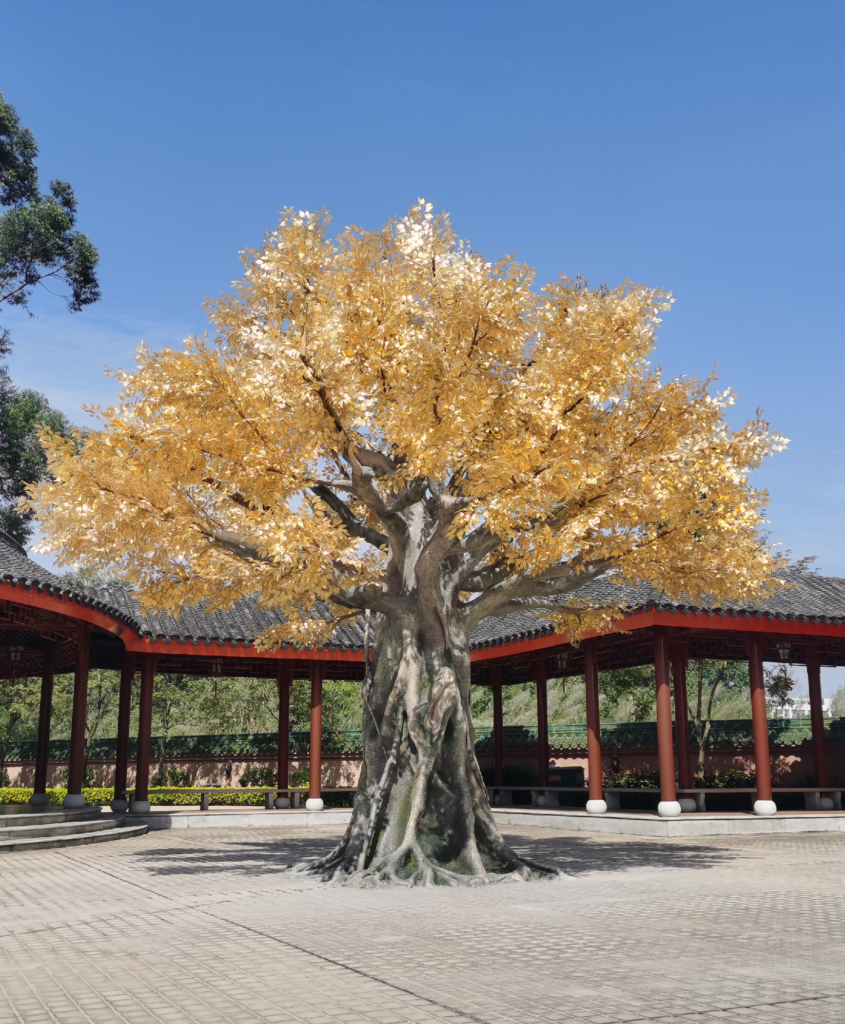
4. Theme Parks & Urban Landscaping
City streets, public parks, and large event venues take a beating from the weather. Maintenance crews do not have the budget or time to replace dead foliage every summer. UV-protected plants give contractors a tough, “set it and forget it” solution for massive outdoor public spaces.
How Can You Verify Real UV Resistance?
In the fake plant industry, “UV Resistant” is a term many suppliers use loosely. However, there is a massive difference between a marketing claim and a technical reality. Based on our factory experience, here is the exact checklist you need to verify real UV protection::
1. Audit the Production Process
Is the UV protection sprayed on or mixed in? Surface coatings wash away in the first rainstorm. For true commercial longevity, factories must integrate UV inhibitors directly into the raw plastic pellets before molding. This process locks the protection safely inside the leaf.
2. Check the Material: PE vs. PVC
The base plastic determines the lifespan. Cheap indoor plants use PVC. High-quality outdoor greenery requires 100% Virgin Polyethylene (PE). Virgin PE absorbs UV stabilizers perfectly and stays stable in extreme heat. PVC simply dries out, off-gasses, and shatters under the sun.
3. Demand Lab Test Reports
Never trust a verbal promise. The product must pass professional laboratory testing.
Look for global standards: Check for specific testing codes like ASTM G154 or ISO 4892-3.
Verify the test hours: 2,000–3,000 hours of QUV testing is commonly considered a commercial outdoor benchmark. Higher UV regions may require 3,000+ hours for long-term durability.
4. Verify the Written Guarantee
A professional supplier will always provide a clear, written warranty against significant fading or structural cracking.
5. Inspect the Physical Sample
Always touch the physical sample. Look for a natural, matte finish. Cheap plants look waxy and overly shiny. High-end, UV-protected leaves feel soft, flexible, and resilient.
Factory Insights: FAQs about UV Resistant Artificial Plants
Q1: Is UV protection the same as waterproof?
No, these are different properties.
UV protection helps resist sunlight damage. Waterproof performance depends on the material type and internal structure. Most polyethylene-based outdoor artificial plants handle rain well, but internal metal components and structural design also affect durability in wet conditions.
Q2: Are UV protected artificial plants automatically fire retardant?
No. UV resistance and fire retardancy are separate treatments.
UV stabilization protects against sunlight. Fire retardant treatment reduces flammability. Some commercial projects require both properties, especially in public or hospitality environments. Always confirm specifications separately.
Q3: What is the difference between UV stabilized and UV coated?
UV stabilized means the additive is blended into the raw material before molding.
UV coated means a protective layer is applied to the surface after production.
Built-in stabilization provides longer-lasting performance because the protection exists throughout the material. Surface coatings may wear down over time, especially under rain, heat, and abrasion.
Q4: Does higher UV testing hours always mean longer lifespan?
Not automatically.
Higher testing hours indicate stronger resistance under controlled lab conditions. However, real-world lifespan depends on climate intensity, installation angle, wind, heat, and environmental factors. Testing hours serve as a benchmark, not a direct year-to-hour conversion.
Q5: If my project is partly shaded, do I still need UV protection?
In most outdoor applications, yes.
Even partial sunlight exposure can accumulate over time. UV radiation reflects from walls, floors, and water surfaces. For long-term outdoor installations, UV stabilization provides more predictable durability and reduces risk.
Q6: What is the difference between PE and PVC for outdoor use?
Polyethylene (PE) is the industry standard for high-end outdoor greenery. It is more flexible and holds UV stabilizers much better than PVC. PVC (polyvinyl chloride) is often used for cheaper indoor items but tends to off-gas and become extremely brittle when exposed to sunlight. For any project requiring a lifespan of more than 12 months, we always recommend 100% Virgin PE.
Final thoughts: UV Protected vs Non-UV Artificial Plants
For outdoor commercial projects, UV protection is a material requirement, not just an added feature. It supports long-term color stability and structural strength under direct sunlight. For indoor decoration, non-UV products remain practical and cost-efficient. When you understand this difference, you can specify the right product for each environment.
At FeelReal, we provide a wide range of premium outdoor artificial plants engineered for durability. Contact our team today to discuss your specific requirements or to request our 2026 Product Catalog.