

Enough of having one piece of plastic ruin your home design. You counted on artificial plants to add easy color and life to your house. But once you choose or put it in the wrong place, that artificial greenery instantly kills the entire appearance. To successfully decorate using faux plants, you should always aim at deceiving the eye into thinking that the plant is real.
This step-by-step guide outlines the top nine mistakes that people make, such as selecting cheap materials or selecting the incorrect planters and why these errors undermine the beauty of your home. We provide you with particular, high-quality thoughts on how to correct the situation so that your greenery appears to be established, expensive, and even natural.
Last Updated: Oct 31, 2025 | Estimated Reading Time: 7 Minutes
1. Choosing Cheap-Looking Faux Plants
This is the worst thing you can do; it is an immediate indicator of fake and it actually diminishes the beauty of your whole room. The low-end artificial plants have stiff, monotone colored leaves and glaring plastic edges. This low quality, particularly the shiny finish, makes the light to bounce back unnaturally and the plant appears to be clearly artificial. The reflection of light on this high-gloss surface underlines the synthetic material, and the plant cannot be considered natural.
The only way to avoid this trap and have a realistic look is to focus on high-quality materials. As a professional Artificial Plants Manufacturer, we understand that cheap plants are unsuccessful since the glittering plastic appearance is due to low grade PE and single injection molds, which are inexpensive to develop but will never appear natural.
The actual remedy is to find plants manufactured using better materials and procedures. Search in terms of Real-Touch, True-Feel, technology, that employs high-grade PE polymers to provide a matte finish and soft feel. Multi-tone color injection during molding produces natural color variations in the best products. This is the point where the price vs. quality argument comes in most: a cheap plant will be a cheap plant always but a quality plant is the long-term investment in your decor.

2. Never Cleaning Your Artificial Plants
Although fake plants do not need to be watered or fertilized, they still need attention, namely, regular dusting. Dust is the silent murderer of realism and immediately conveys neglect. When a coating of gray dust is deposited on the leaves, it dulls the desired color of the plant, and emphasizes any existing seams or flaws in the plastic, and instantly informs visitors that the plant is plastic and has been neglected. This dry, sterile appearance is contrary to the nature of a living plant that is supposed to be bright and clean.
Cleaning should be a part of your routine so that the illusion could be maintained and so that the plant could look the best it could. In large plants, a quick burst of air using a hairdryer on cool setting is miraculous in quick dusting. To get a more fulfilling clean, wipe the individual leaves with a damp microfiber cloth after every one month. Plants outside or in damp rooms such as bathrooms are better off being given a hose-down occasionally using a light solution of soap and water to clear off any dirt or soap film. The easiest, and the best, thing you can do to maintain the elegant appearance of your artificial plants will be to keep the foliage dust free and at all times.

3. Using Only Fake Plants in Your Space
When a design is based on the use of artificial plants only, the appearance of the home may become sterile, flat, and staged. This excessive dependence on artificial plants destroys the diversity, random flaws, and natural growth forms that define a healthy natural ecosystem. In the absence of any live plants, the artificial plants are deprived of a visual anchor, and the environment appears to be out of touch with nature and its vitality. The monotony and inanimate appearance of 100% fake foliage can actually attract more attention to its artificiality.
The most appropriate interiors adopt a strategic blending approach, which involves the use of a combination of both real and artificial plants. Plant your smaller living plants, e.g., succulents, herbs or small pothos, in places where they can readily obtain the required natural light, such as in the sill of a kitchen window, or on a sunlit tabletop. Then you can save your good artificial plants to really difficult locations, like dark rooms, high-traffic locations where spills may occur, or high shelves where they are impractical to maintain. The deliberate co-existence of the flourishing live plants confirms the authenticity of the artificial plants around it, and the design looks naturally green and natural instead of artificial.
4. Picking Plants That Don’t Match Your Decor Style
The wrong kind of foliage selected to match your established interior style will create an instant visual clash, and the plant and the aesthetic of the room will be out of step. As an illustration, a smooth, architectural plant with glossy, hyper-tropical leaves would be totally out of place in a rough and rustic or farmhouse-style house. This makes the plant then a shocking object that conflicts with the textures and color palette of your furniture and textiles, instead of being a supportive, natural element.
To achieve aesthetic balance, it is always better to choose the style of your artificial plant to support the already created atmosphere in your home design. When you are working with a minimalistic or Scandinavian space, it is better to use clean and structured vegetation with sparse foliage, such as tall Olive trees or bare Sansevieria (Snake Plant).
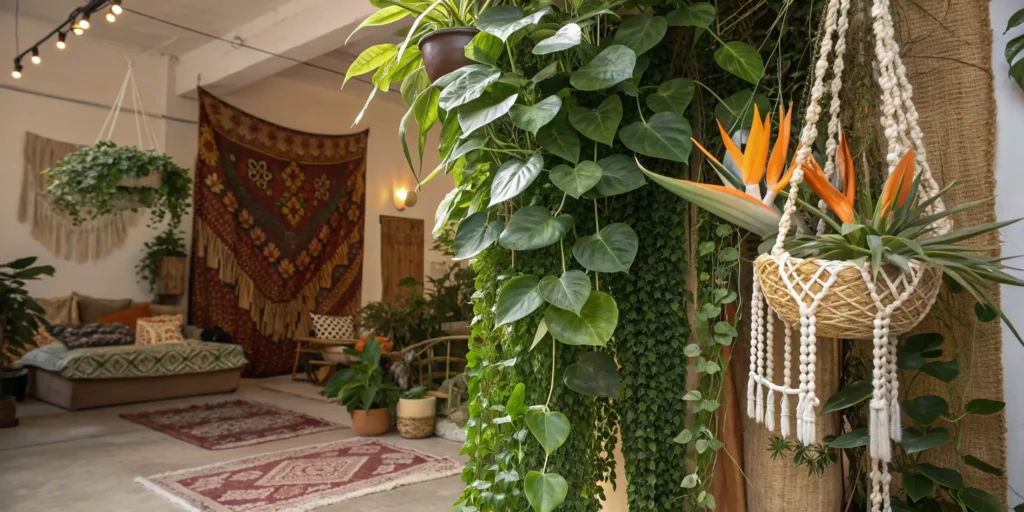
To create a Bohemian or maximalist design, select flowing and layered plants of various textures, e.g., a large hanging pothos or a sprawling Bird of Paradise. The plant must be able to blend into the room by balancing the color temperature of the room (cool greens, modern design; warmer, muted greens, vintage design), without being a visual juxtaposition.
5. Putting Plants Where Real Plants Would Never Survive
This error immediately breaks the suspension of disbelief and literally reveals a fake plant, killing the illusion of natural life. The eye instinctively understands that an extensive, tropical plant such as a Banana tree needs a lot of sunlight and regular watering. Planting a huge, glowing plant in one of the dark corners of the basement instantly tells the viewer that the greenery is artificial. Such a position is biologically impossible and does not correspond with the apparent needs of the plant.
To have your artificial plants appear as truly realistic as possible, you have to simulate light by positioning them in areas where a real plant would logically exist, even though the environment may not be as conducive as it would be in the real world. An example of this would be to put a faux sun-loving succulent on a high shelf or console table where it theoretically would be getting reflected light.
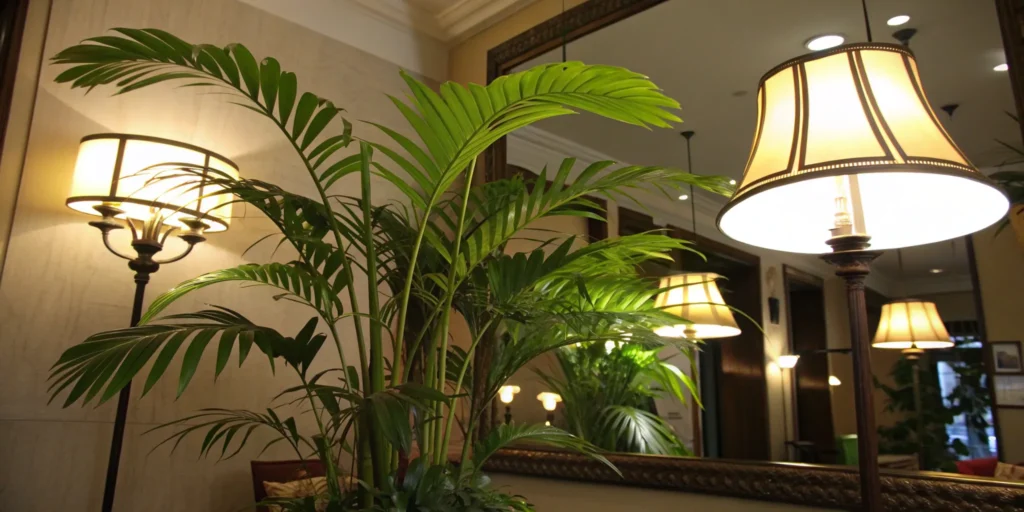
Plant large tropical plants nearer to floor lamps or mirrors, which gives the impression of a neighboring source of light. This little recognition of botanical reasoning, of what the plant seems to need, natural light and air, is essential in deceiving the eye and improving the quality of your decor.
6. Placing Plants Straight From Box Without Adjusting
Artificial plants are produced and exported in a small and sometimes tightly packed form to save space. This leads to flat and rigid leaves and straight stems that are straight. When you just take the plant out of the box and put it on a table, the two-dimensional, stiff, and factory-perfect structure of the plant will appear unnatural, lifeless, and fresh. This stillness, haphazardness, and natural flow is the most widespread error that even the best quality plants will have after being unboxed.
The trick to the highest degree of realism is the Art of Imperfection, or, to put it another way, devoting time to bending and shaping the foliage by hand. Bend the main trunk with the help of the flexible wire that is inside the stems, twist some leaves to break the uniform flat surface, and bend fronds at slightly different angles.
Add randomized variation which is organic: slightly curl a few leaf ends, bend an edge, and bend a few stems to a slight downward curvature to simulate the effect of weight of a natural growth. This deliberate attempt puts into play the small asymmetrical imperfections and randomly chosen angles that are only present in natural plants and immediately make the plant appear older, established and credibly realistic.
7. Using Wrong Size Plants For Your Space
The most frequent pitfalls that break the whole spatial design and flow are the sizing errors. Having a small potted plant in the center of a big sideboard or attempting to fit a huge fiddle leaf fig into a small hallway corner changes the proportions of the room, leaving both the furniture and the plant out of place. A small plant will seem negligible, a piece of an afterthought instead of an object, whereas a large plant will overwhelm the furniture and cause a visual impression of messiness and disorder.
The only way to get the best balance is to ensure that the chosen plants are appropriate to the scale already in place in the area in which they will be situated. A big open corner needs a large artificial tree (such as a 6-foot Areca Palm or a tall Olive Tree) to act as a point of reference and mark the space.
In the case of tabletops, the Rule of Thirds applies: the size of the potted plant is expected to be about two-thirds of the visual space it is placed in (e.g. a plant on a console table is supposed to be two-thirds the height of the console table itself). Also, make sure that the pot is proportional to the volume of the foliage, a small pot with a huge canopy is a clear sign of instability and poor quality.

8: Overcrowding Rooms With Too Many Plants
Although the desire to transform your house into a green jungle is quite natural, excessive use of plants, especially a set of various smalls, a bunch of fake flora, will not bring harmony but chaos to the eye. With all the flat surfaces, end tables to mantels, bearing a small, lonely pot, the room has lost its visual focus and merely appears to be cluttered instead of resting the eye. This is aesthetic noise that spoils the serene appearance that greenery is meant to offer.
Rather than sprinkling little accents throughout a room, make three to five big moments of greenery in a room, and apply the technique of impact grouping. This could be one big floor plant to anchor somewhere in the corner, one big hanging plant somewhere close to a window, and one, edited bunch of three small potted plants on a bookshelf. In grouping, different heights should be used (a tall plant, a medium one on a stack of books and a small one on the shelf) to make a natural and asymmetrical visual triangle. Good quality accent plants placed strategically in cohesive groups are a thousand times more effective than a dozen inexpensive, mismatched fakes trying to be visualized at the same time.
9: Using Cheap, Unattractive Planters
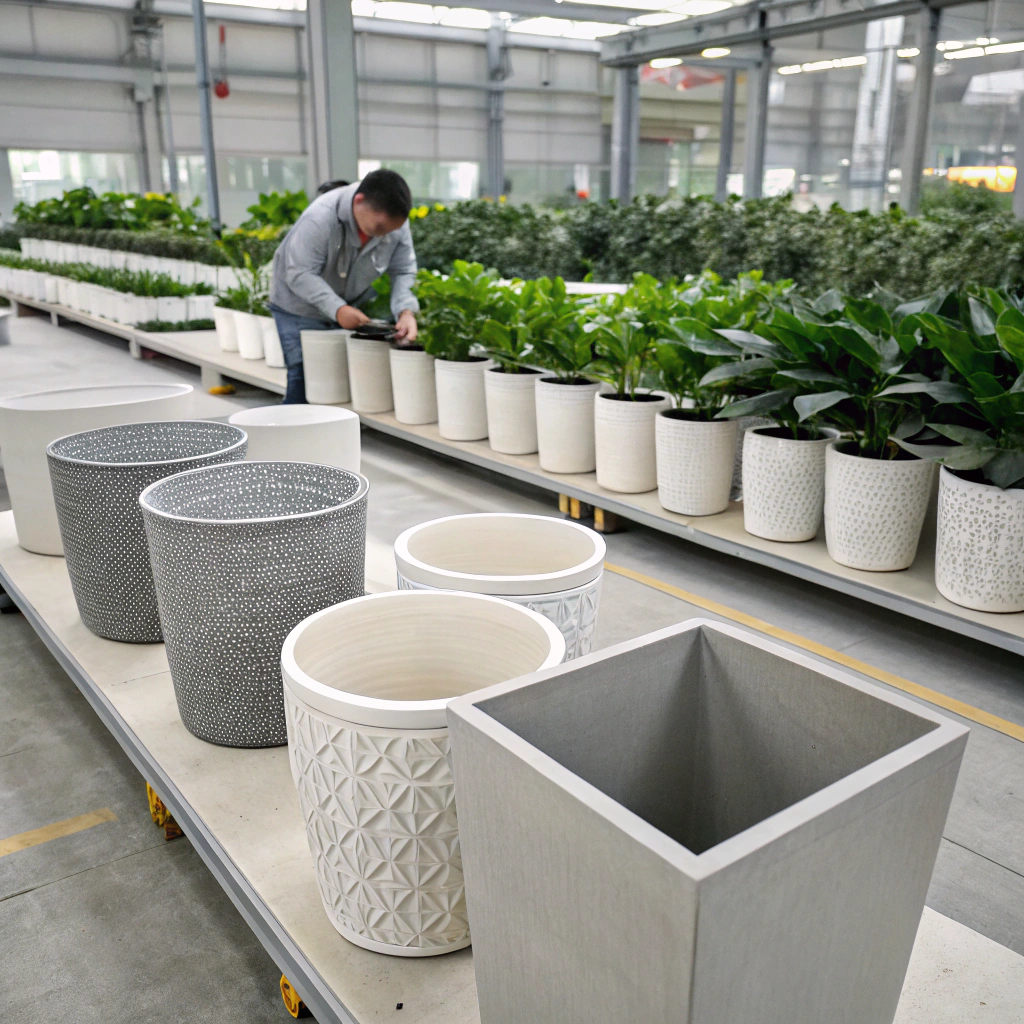
Your artificial plant is framed by the pot or planter, and a low-cost, weakly constructed plastic container is a significant aesthetic downside that destroys the whole appearance. In many cases, counterfeit plants are packed in a small, wobbly plastic container or a similarly inexpensive ceramic pot that will show the absence of quality in the whole package. Even this little fact can ruin the costly, advanced appearance of an otherwise quality fake plant by rendering the base weak and temporary.
To guarantee the best presentation, there is no way you will not budget a decorative planter that is in tandem with your style of design. Enhance the foundation with woven rattan baskets (to be used in boho/rustic style), textured matte ceramic pots (to be used in modern design), or metallic containers (to be used in industrial style).
Most importantly, you have to touch upon the filler material. Take out the typical, clichéd artificial moss or bare foam base and layer on a layer of faux soil filler (such as actual river pebbles, decorative gravel, or coffee grounds mixed with glue). This additional detail includes the synthetic anchor and immediately makes the plant appear heavier, established and believably potted.
FAQs about Artificial Plant Decoration
1. Are fake plants out of style?
Absolutely not. Artificial plants have been developed to a high standard, and have become a commodity in the high-end design and home decor. They are not considered to be an alternative to nature, but a long-lasting, maintenance-free device to introduce structure and color to problematic areas. Incorporating high quality and modern foliage instead of the plastic that is visible makes your arrangement look trendy and elegant.
2. Where should you not put fake plants?
Do not put artificial plants directly beside a healthy living plant, as the comparison will make the artificiality of the fake very obvious. They should also not be placed in places where they are most likely to accumulate dust or dirt without cleaning (high-traffic places near doors or heavy machinery). The most important rule is, however, not to go to places which are contrary to the natural reality, like in deep, dark places the plants which like the sun would not be found.
3. What are the rules for decorating with artificial plants?
The first guideline is to be realistic by deliberately being imperfect. Do not leave the plant rigid and unbent out of the box, bend the leaves and stems. Always take good quality planters and change the default plastic filler with fake soil or pebbles. Lastly, include natural plants wherever feasible to bring the decor close to natural authenticity.
4. Can you put fake plants in bathrooms?
Yes, bathrooms are one of the most suitable locations of artificial plants! Bathrooms have a problem with high-light live plants, although they are humid. As fake plants do not need light and can grow in humid conditions, they introduce the needed life and color to the area. Only make sure that you clean them off occasionally to avoid the accumulation of soap and mildew.
Conclusion:
The evolution of artificial plants has given homeowners an unprecedented tool to elevate their interior design with effortless greenery. The difference between a beautifully styled space and one ruined by cheap-looking decor often comes down to mastering the nine common mistakes detailed here. By committing to high-quality materials, rejecting uniform factory shapes, and investing in attractive planters and faux soil, you move your decor from “fake” to realistic.
Remember that your artificial plant is a permanent fixture; treat it as a significant piece of home decor by cleaning it regularly, sizing it correctly, and placing it logically where a natural plant could thrive. Focus on these simple maintenance and quality upgrades, and your faux foliage will enhance your home’s aesthetic for years to come. To learn more about the choice of artificial plants as elements of home decoration, read our article on How to Choose Artificial Plants for Indoor Home Decoration.