
Palm trees and palm-like plants are easy to care for and pleasing to the eye. People choose them for indoor and outdoor decoration. However, when you have cats, it’s essential to make sure that the palm trees in your home aren’t dangerous to your feline companions.
Though most palm trees safe to cat, some can be toxic and even life-threatening to cats. If you do not know how to identify the toxic palm-like plants, and what to do if your cat ingests them, do not worry, we will talk about them in this article. Additionally, we’ll discuss a safe alternative for pet-friendly homes.
Last Updated: 22nd, Feb, 2026 | Estimated Reading Time: 8 Minutes
– Are Palm Leaves Dangerous to Cats?
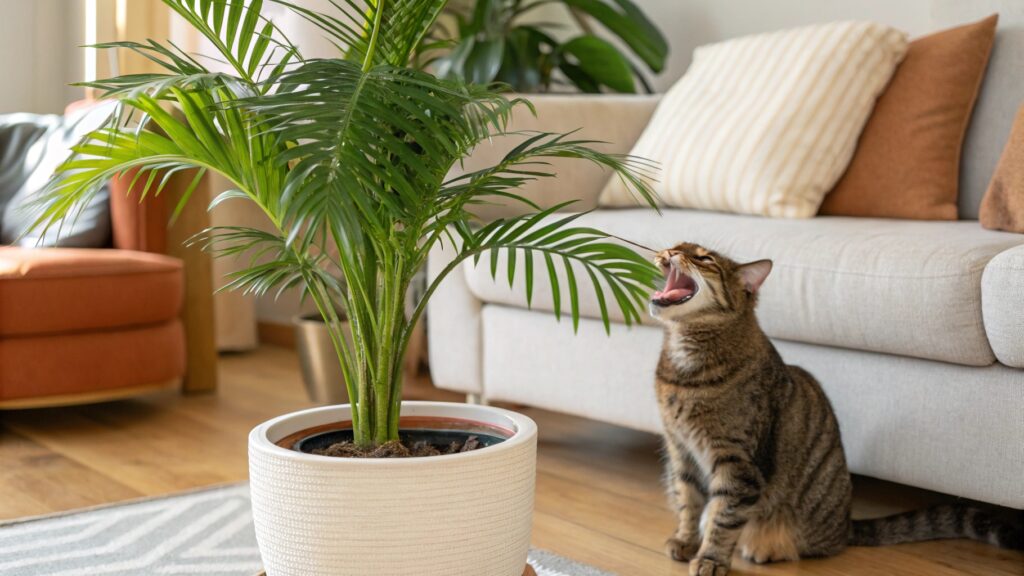
For many common types of palm trees, the leaves themselves are not toxic to cats. Common varieties like the Areca Palm, Kentia Palm and Majesty Palm are generally considered safe. However, not all palms are harmless for cats. Some palm-like plants, such as the Sago Palm, are very much the villains in our cat toxicity scale tale. They are highly toxic and can cause severe health issues if ingested by cats. It’s crucial to identify the specific type of palm plant in your home and understand its potential risks.
– Toxic Palm-Like Plants to Avoid
The Sago Palm (Cycas revoluta) is extremely poisonous to cats and must be kept out of your home and yard. Despite its name and appearance, it is not a palm tree. It’s a cycad, a family of ancient plants that contain a powerful toxin called cycasin. Every single part of the Sago Palm is a threat—from its leaves to its roots. The seeds (or “nuts”) are the most concentrated and deadly part.
Dracaena plants are hardy and easy to care for. They can subsist in different light levels and help to keep your air clean. However, they have a chemical compound in their leaves called saponin, a chemical compound that can cause various symptoms if ingested.
These are two most common types of the toxic palm-like plants that are sold as houseplants or garden plants. It’s best to avoid keeping these plants in your home. If you must, keep them out of reach or in a separate room that your cat can’t access.
– What Happens if a Cat Eats Palm Leaves?
Most leaves of palm trees are safe for cats and don’t offer any nutritional benefits to cats, but some are extremely toxic. Do cats eat palm tree leaves? Yes. And in most cases, cats’ owners don’t realize their cats ate the toxic plants until they see symptoms.
These symptoms signs of poisoning can be seen in as little as 15 minutes after consumption but may not appear for several hours. So, pay attention to the following symptoms if a cat chews on or eats part of a palm plant, especially a toxic variety.
Sago palm poisoning symptoms include vomiting, drooling, diarrhea, lack of appetite, and potential liver or central nervous system damage within 2-3 days. Without immediate veterinary care, death may occur within 2-3 days. If your pet ingests sago palm, rush them to a vet for decontamination and treatment.

Critical Signs of Palm Poisoning in Pets
Toxic varieties like the Sago Palm carry danger in every part of the plant. The leaves, stems, and roots all contain cycasin. This potent toxin attacks the liver. The seeds are the most lethal, as they hold the highest concentration of this poison. Even a small bite can trigger a life-threatening reaction.
If your pet ingests a toxic plant, you will likely see symptoms within 15 to 60 minutes. Watch for these specific warning signs:
- Immediate Digestive Distress: Your cat may start vomiting or drooling excessively (hypersalivation).
- Severe Diarrhea: Look for loose stools or signs of abdominal pain.
- Loss of Appetite: Poisoned pets usually refuse food and act lethargic.
- The “Silent” Phase: A pet might seem to recover after the initial vomiting. However, the cycasin is still destroying the liver internally.
- Advanced Organ Failure: Within 2 to 3 days, you may notice jaundice (yellowing of the gums or eyes), bruising, or nosebleeds.
- Neurological Damage: In severe cases, pets suffer from tremors, seizures, or permanent central nervous system damage.
What to Do if Your Cat Ingests Palm Leaves:
Seek treatment right away if you suspect that your cat may have eaten toxic palm fronds.
- Contact a veterinarian: Call your vet or an emergency animal poison hotline right away.
- Provide Information: Bring a sample or photo of the plant to help identify the species and determine the appropriate treatment.
- Monitor Symptoms: Keep a close eye on your cat’s behavior and report any changes to the vet.
– Are Artificial Palm Plants Toxic Or Poisonous to Cats?
Artificial palm plants are not toxic or poisonous to cats. Quality faux palms use inert materials such as plastic, polyester, and silk. These materials contain no plant-based toxins that can harm cats through casual contact. Cats may sniff, brush against, or even lightly chew artificial palm leaves without risk of poisoning. This makes artificial palm plants a safe alternative to real palms for cat-friendly homes, apartments, and commercial spaces.
As responsible pet owners, it’s necessary to create a safe and stimulating environment for our feline friends. A surprising way that can contribute positively to a cat-friendly home is the introduction of fake palm plants. Unlike some real plants that contain harmful substances, the faux potted palm plants are made from pet-safe materials and non-toxic to cats.
1. Non-toxic materials
Artificial plants are made from a combination of materials such as silk, plastic, and polyester. These materials do not present a significant health risk, even if pets or children ingest small amounts accidentally.
2. No risk of poisoning
Some natural palm plants can be toxic to cats. Some of their varieties can cause mild digestive issues or leading to serious health issues. Fake plants, on the other hand, eliminate this worry completely by creating a safe environment. In this way, your cat can freely roam without the risk of ingesting harmful substances.
3. Elimination of soil-related problems
Cats like digging and playing in soil. Messy floors and potential health concerns can be led by this behavior, especially if the plants are toxic. Artificial trees eliminate the need for soil, prevent a source of mess and minimize the risk of allergic reactions in sensitive cats.

At FeelReal, our factory produces artificial palm trees under strict quality and safety control. We use certified non-toxic materials that meet international standards. Our plants comply with REACH, ROHS, and relevant fire-retardant regulations. Each palm tree passes material testing and structure inspection before shipment. Our collection includes Areca palms, Coconut palms, Kentia palms, Sago palms, Banana palms, and more. We also support full customization for size, trunk, and foliage. This ensures safe, reliable palm trees for homes, pets, and commercial spaces.
Conclusion:
Though many palm plants are safe for cats, it’s important to be aware of those toxic plants like the Sago Palm and Dracaena. If your cat ingests palm fronds, especially from a toxic plant, seek veterinary care immediately. If you do not want to worry a lot, consider artificial palm trees. Imitation palm plants offer the same visual appeal without the risks. By choosing pet-safe options, you can create a beautiful and safe environment for both your home and your pet friend.
FAQs:
1. Are all artificial plants safe for cats?
While fake plants and trees aren’t toxic, you should choose high-quality artificial plants made from durable, non-toxic materials. Poorly made ones could have small parts that break off and become a choking hazard.
2. How do I clean artificial plants safely in a home with pets?
Cleaning is simple and pet-safe. For regular dust, you can use a microfiber cloth or a feather duster. For a deeper clean, you can wipe the leaves with a cloth dampened with a mild soap and water solution, then wipe again with a clean, damp cloth to remove any soap residue. Avoid harsh chemical cleaners, as your pets could come into contact with them.
3. Are all palm trees poisonous to cats?
No. Real palms, such as the Areca Palm and Kentia Palm, are generally safe for cats. However, many plants with “palm” in their name, like the Sago Palm, belong to different families and carry deadly toxins. Always verify the specific species before bringing a plant home.
4. Why is the Sago Palm so dangerous for pets?
The Sago Palm contains a toxin called cycasin. This chemical attacks the liver and causes permanent organ damage. Every part of the plant is poisonous, but the seeds hold the highest toxin concentration. A single bite can kill a cat within days without emergency care.
5. Are artificial palm plants safe for my cat to chew?
Yes. High-quality artificial palms use non-toxic materials like silk and premium polymers. These synthetic plants do not contain the harmful chemicals or biological poisons found in living palms. They create a 100% safe environment for your curious pets.