
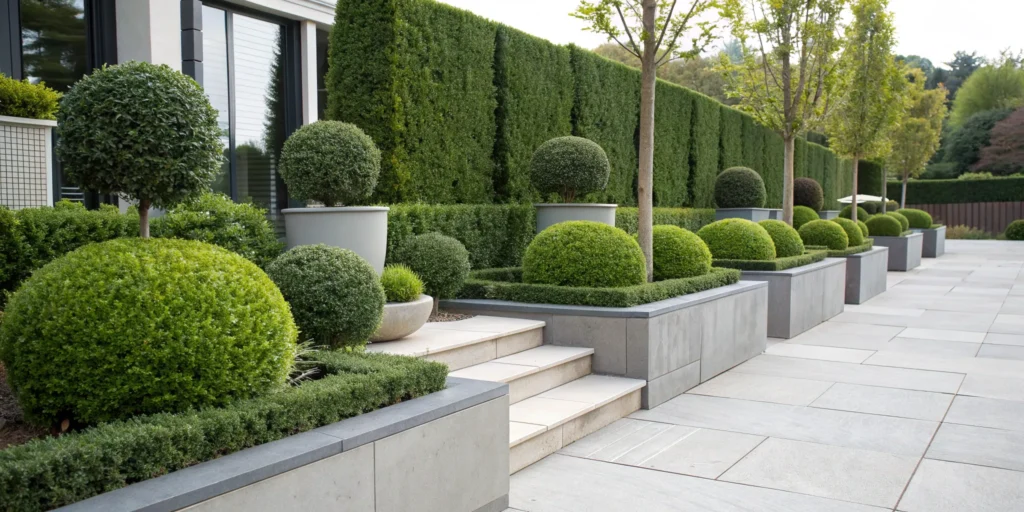
Boxwood shrubs remain a top choice for modern landscaping decor. Boxwood provides structure, year-round greenery, and design flexibility. With proper selection, you can create elegant hedges, formal gardens, or contemporary borders. Modern gardeners and landscape designers choose boxwoods for their adaptability and low-maintenance appeal.
Why Boxwood Shrubs Dominate Modern Landscape Design?
Boxwoods dominate modern landscapes because of their versatility and durability. Their evergreen leaves provide consistent color. And their dense growth allows precise shaping. They suit geometric patterns, natural borders, and container plantings.
You can easily integrate boxwood shrubs into any garden style. They thrive in sun and tolerate pruning well. They are perfect for both residential and commercial projects.
Practical Benefits for Landscapes:
Year-round greenery: Boxwoods maintain lush foliage in all seasons.
Design flexibility: You can shape them into hedges, balls, or topiaries.
Durable investment: With proper care, boxwoods last decades with minimal replacement.
Top Boxwood Shrub Types for Contemporary Landscaping
Boxwood shrubs remain a cornerstone of modern landscaping. Their evergreen foliage and versatile forms make them ideal for formal hedges, privacy screens, topiaries, and contemporary garden accents. Below is a comprehensive guide to top boxwood varieties for designers, landscapers, and homeowners seeking timeless elegance with minimal hassle.
1. Common Boxwood (Buxus sempervirens) – The Traditional Foundation
Common boxwood is slow-growing and forms naturally rounded shapes. It reaches 5–20 feet in height, perfect for hedges or tall screens. They are ideal for formal hedges, foundation plantings, and classical-modern fusion designs.
2. English Boxwood (Buxus sempervirens ‘Suffruticosa’) – The Dwarf Classic
English boxwood grows just 2–3 feet tall, forming dense, cloud-like shapes. Its glossy leaves resist leaf miners and maintain crisp geometric lines. Its compact size suits low formal hedges, knot gardens, and precise border edging.
3. American Boxwood (Buxus sempervirens)
American boxwood thrives in cold climates, growing 10–20 feet tall. Its dark green foliage make it a reliable choice for privacy screens and backdrop plantings. Cold-hardy and low-maintenance, it provides consistent greenery even through harsh winters.
4. Japanese Boxwood (Buxus microphylla var. japonica)
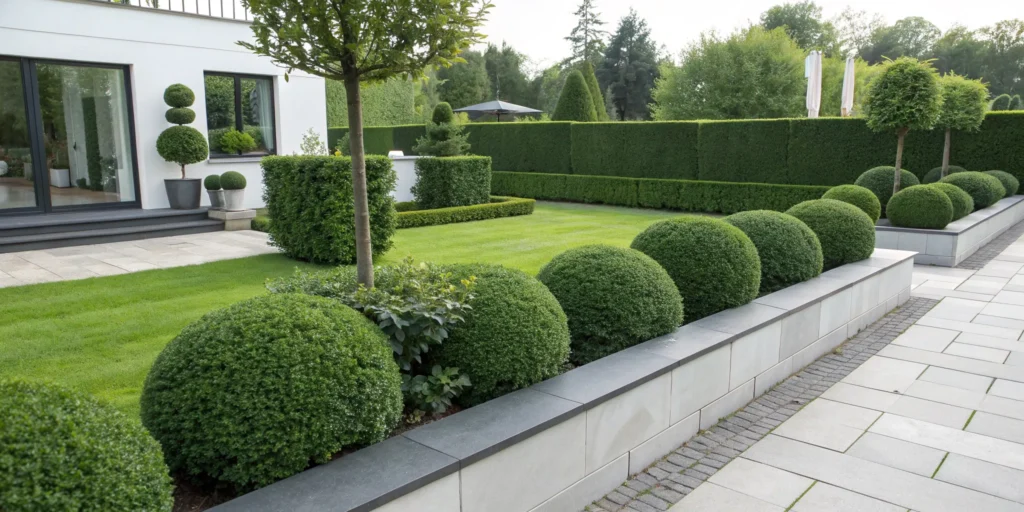
Japanese boxwood excels in hot, humid climates. It reaches 6–8.5 feet tall and spreads wide, forming effective privacy hedges. Their leaves may turn bronze in winter. Ideal for zones 6–9 and southern landscapes.
5. Korean Boxwood (Buxus sinica)
Korean boxwood features small leaves and a compact form. Growing 2–10 feet tall with twice the width, it is excellent for low mounds, edging, or bonsai. It survives extreme cold in zone 4, combining durability with elegance.
6. Wintergreen Boxwood (Buxus sinica var. insularis ‘Wintergreen’)
Wintergreen boxwood grows 2–4 feet tall and develops bronzy winter foliage. Its faster growth delivers quicker coverage. They are ideal for hedges, borders, and impatient gardeners.
7. Winter Gem Boxwood (Buxus sinica var. insularis ‘Winter Gem’)
Winter Gem retains vibrant green color through winter. They can grow 2–3 feet tall. They are perfect for small-space borders, foundation plantings, and low-maintenance landscapes.
8. Dwarf Korean Boxwood (Buxus sinica var. insularis ‘Nana’)
‘Nana’ grows 1–2 feet tall, perfect for very low hedges, small formal borders, and shaded areas. Its exceptional cold hardiness make it effortless to maintain.
9. Golden Dream Boxwood (Buxus ‘Golden Dream’)
Golden Dream delivers rich green leaves with golden edges year-round. Its compact 2–3 feet form is perfect for accent plantings or contemporary specimen displays.
10. Golden-Edged Boxwood (Buxus sempervirens ‘Aureomarginata’)
This cultivar grows 8–10 feet tall with golden leaf margins. They are ideal for screening, standards, or backdrop plantings, it combines height with vibrant color.
11. Green Velvet Boxwood (Buxus ‘Green Velvet’)
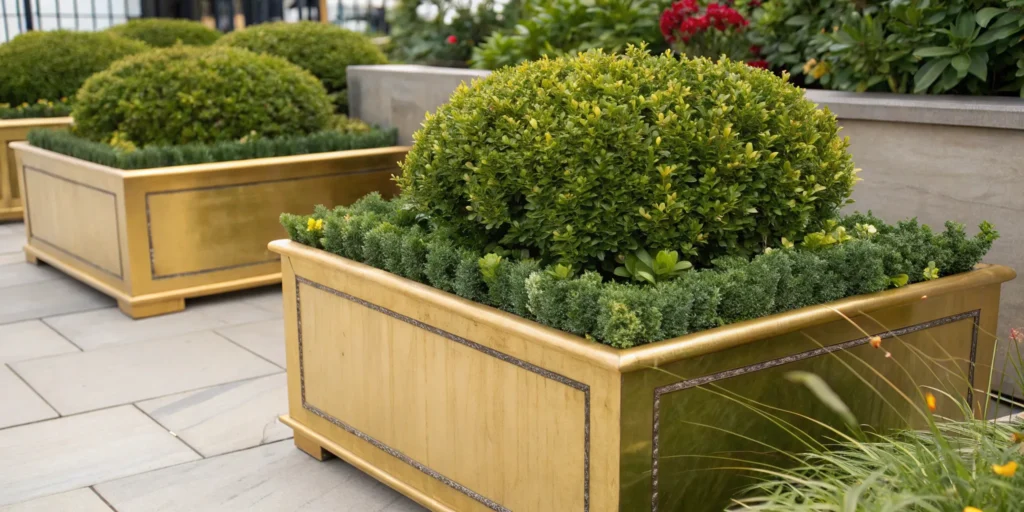
Green Velvet naturally forms perfect spheres. Its dense, velvety foliage makes it ideal for topiaries, geometric designs, and container planting with minimal trimming.
12. Green Mountain Boxwood (Buxus ‘Green Mountain’)
Green Mountain grows 5–7 feet tall in a narrow pyramidal shape. It works perfectly for spiral topiaries, vertical accents, and tight spaces.
13. Baby Gem Boxwood (Buxus ‘Baby Gem’)
Baby Gem forms small 3–4 feet mounds with fine leaves. They can be used for containers, low borders, and focal points.
14. Green Gem Boxwood (Buxus ‘Green Gem’)
Green Gem naturally forms a compact ball shape. It suits mass planting, topiary, and container use while maintaining year-round structure.
15. Dee Runk Boxwood (Buxus sempervirens ‘Dee Runk’)
Dee Runk grows 10–12 feet tall but only 2–3 feet wide. It creates vertical accents, frames doors, and adds dramatic height in tight spaces.
16. Fastigiata Boxwood (Buxus sempervirens ‘Fastigiata’)
Fastigiata grows 10–12 feet tall in a narrow pyramidal form with unique blue-green foliage. It provides vertical interest and architectural form without extensive pruning.
17. Pyramidal Boxwood (Buxus sempervirens ‘Pyramidalis’)
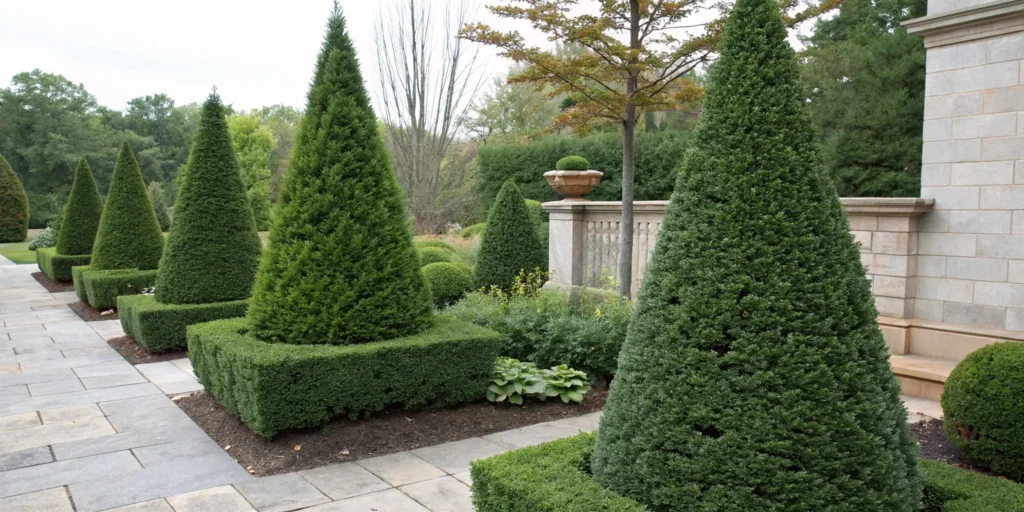
Pyramidal boxwood naturally forms cones 6–12 feet tall and 2–3 feet wide. It works for entrances, corners, and vertical accents with minimal maintenance.
18. Sprinter Boxwood (Buxus microphylla ‘Bulthouse’)
Sprinter grows 2–4 feet fast, ideal for topiaries and shaped standards. Frequent trimming is needed, but it achieves mature form quickly.
20. Vardar Valley Boxwood (Buxus sempervirens ‘Vardar Valley’)
Vardar Valley grows 2–3 feet tall but 4–6 feet wide, ideal for low formal hedges and knot gardens. Its spreading habit quickly fills horizontal space.
21. Glencoe Boxwood (Buxus ‘Glencoe’)
Glencoe grows 3–4 feet tall and maintains green winter color. Perfect for zones 4–5, it survives extreme cold while keeping landscapes vibrant.
22. Highlander Boxwood (Buxus sempervirens ‘Highlander’)
Highlander grows 7–9 feet with fast vertical growth. They deliver height and density faster than most varieties. These boxwoods are ideal for quick privacy screens.
Modern Landscaping Design Ideas with Boxwood Shrubs
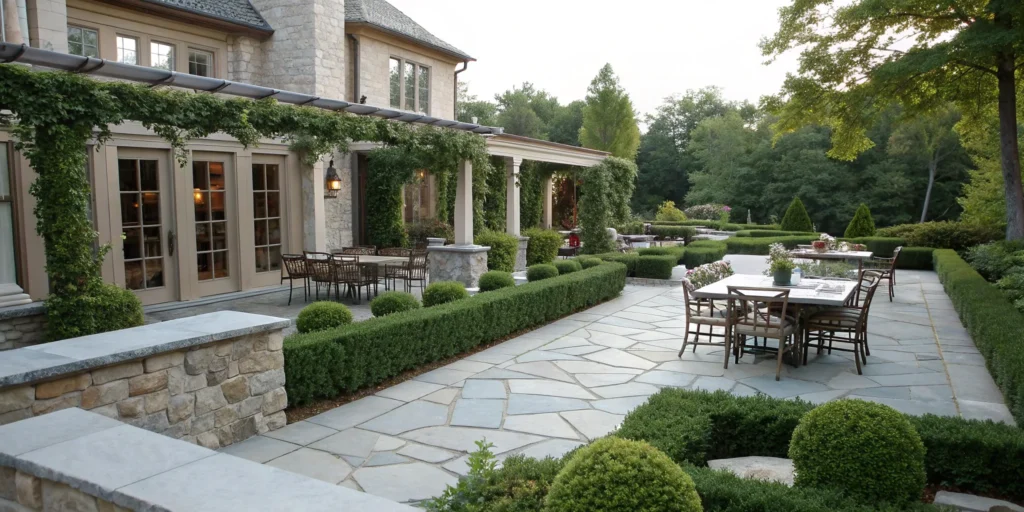
Modern landscaping focuses on “Green Geometry” to create a sense of calm and order. Boxwood shrubs allow precise structure and creativity in modern landscapes. You can use them for geometric layouts, natural flowing borders, and container gardens.
Sculptural Entryways for Homes and Businesses
Create a powerful first impression at any entrance. You can place manicured boxwood globes or cones along the walkway. These sharp shapes contrast beautifully against neutral building facades. You can use tall cones to flank a residential front door or a corporate lobby entrance. This adds immediate height and luxury to your property.
Private Pool Edges and Resort-Style Living
Line your pool edges with low boxwood hedges. Pair them with white hydrangeas or silver ornamental grasses. This combination creates a sophisticated privacy screen for luxury resorts or residential backyards. You can define the outdoor room without building a heavy, vision-blocking fence.
Tiered Greenery for Visual Depth
Build a “staircase” effect with layers of different heights. Plant small boxwood varieties as foreground edging. You can place medium shrubs behind them and use tall varieties as the final backdrop. This technique adds massive visual depth to small home gardens or compact commercial flowerbeds.
Minimalist Courtyards and Atriums
Enhance minimalist courtyards in office atriums or home patios. You can pair boxwood specimens with a single olive tree for a Mediterranean aesthetic and install them in large, matte-black planters. This setup guarantees year-round elegance for any decor setting.
Defining Dining Zones and Patios
Enclose stone patios or outdoor dining decks with a continuous boxwood frame. This defines the seating area as a distinct zone. It serves as an excellent divider for outdoor cafe seating or a family terrace. You keep the landscape organized and distinct from general walkways.
Artificial Boxwood Shrubs: The Zero-Maintenance Alternative
Real boxwood presents challenges in landscaping. Boxwood blight, leaf miners, and other pests can destroy the hedges. And, they require precise trimming, consistent watering, and well-drained soil to stay healthy. Even experienced gardeners struggle to maintain perfect shape and color throughout the year.
Artificial boxwoods solve these problems completely. They replicate the look, texture, and density of live shrubs while eliminating all routine maintenance. So, more and more designers and landscapers are choosing artificial boxwoods for both residential and commercial projects because of their reliability and consistent beauty.
Key Benefits:
Zero Maintenance: You do not need irrigation, pruning, fertilization, or pest control. Artificial boxwoods stay perfect without any effort.
Consistent Appearance: Leaves remain vibrant and full in every season. Your hedges or topiaries always look healthy and uniform.
Versatile Placement: Install them indoors, on rooftops, balconies, or shaded areas where live plants cannot thrive. They handle any environment without stress.
Long-Term Cost Efficiency: While real boxwoods demand ongoing care, artificial shrubs offer a one-time investment with lasting beauty.
Boxwood shrubs offer unmatched versatility, structure, and longevity in modern landscaping. Choose varieties that match your climate, space, and design goals. For zero-maintenance alternatives, consider high-quality artificial boxwoods to achieve the same aesthetic with minimal effort.